Type: Material Studies
Location: Pittsburgh, PA
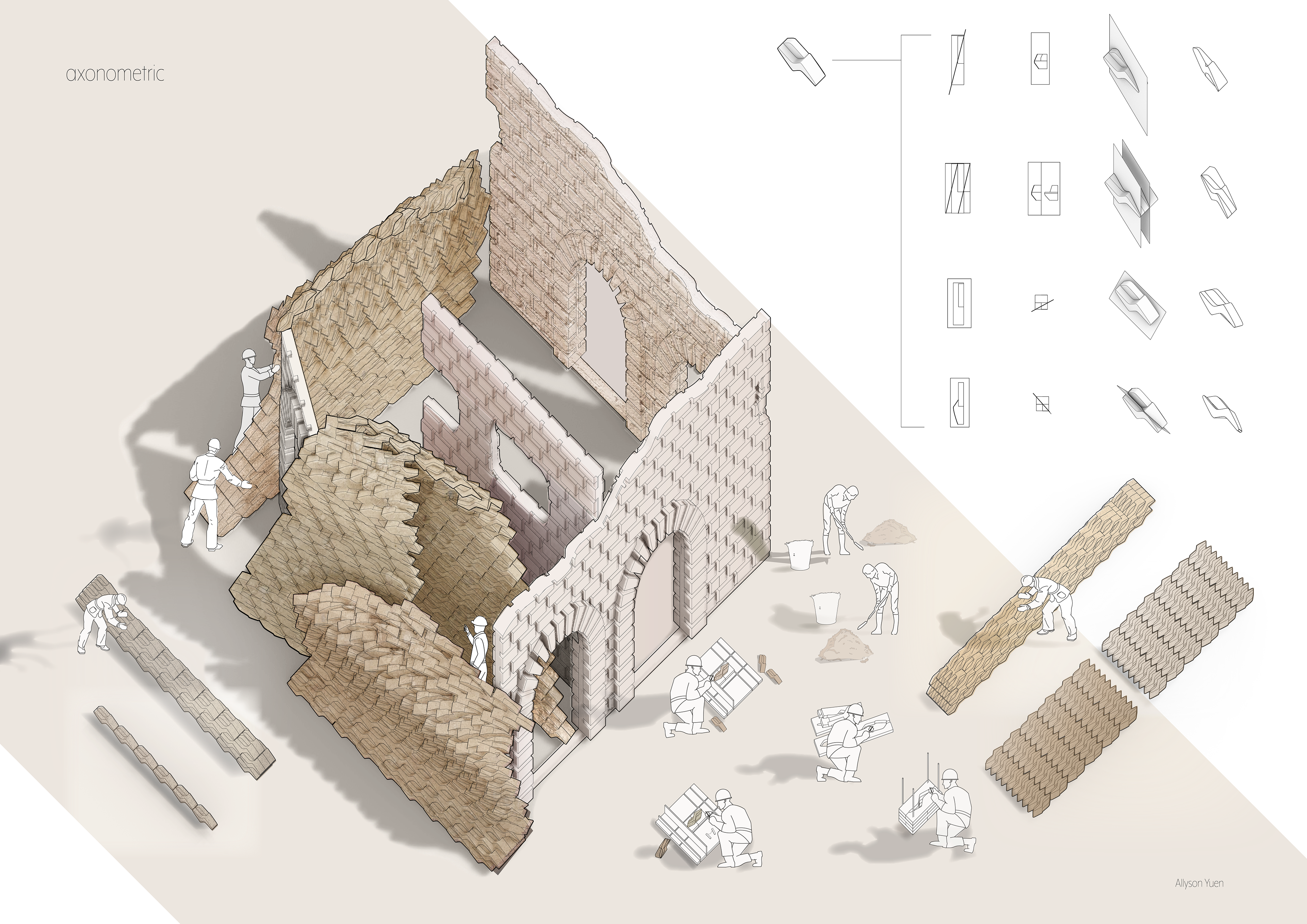
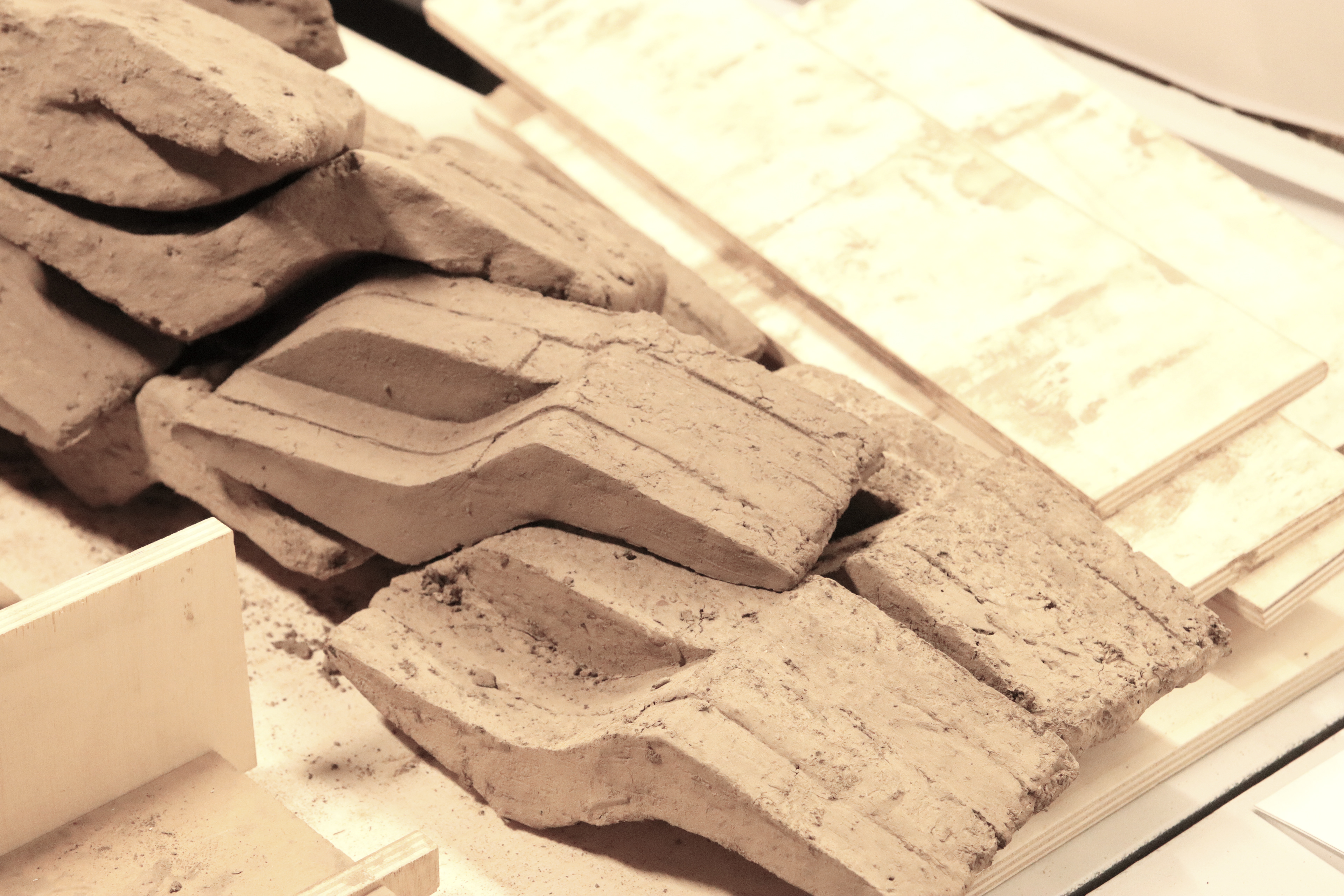
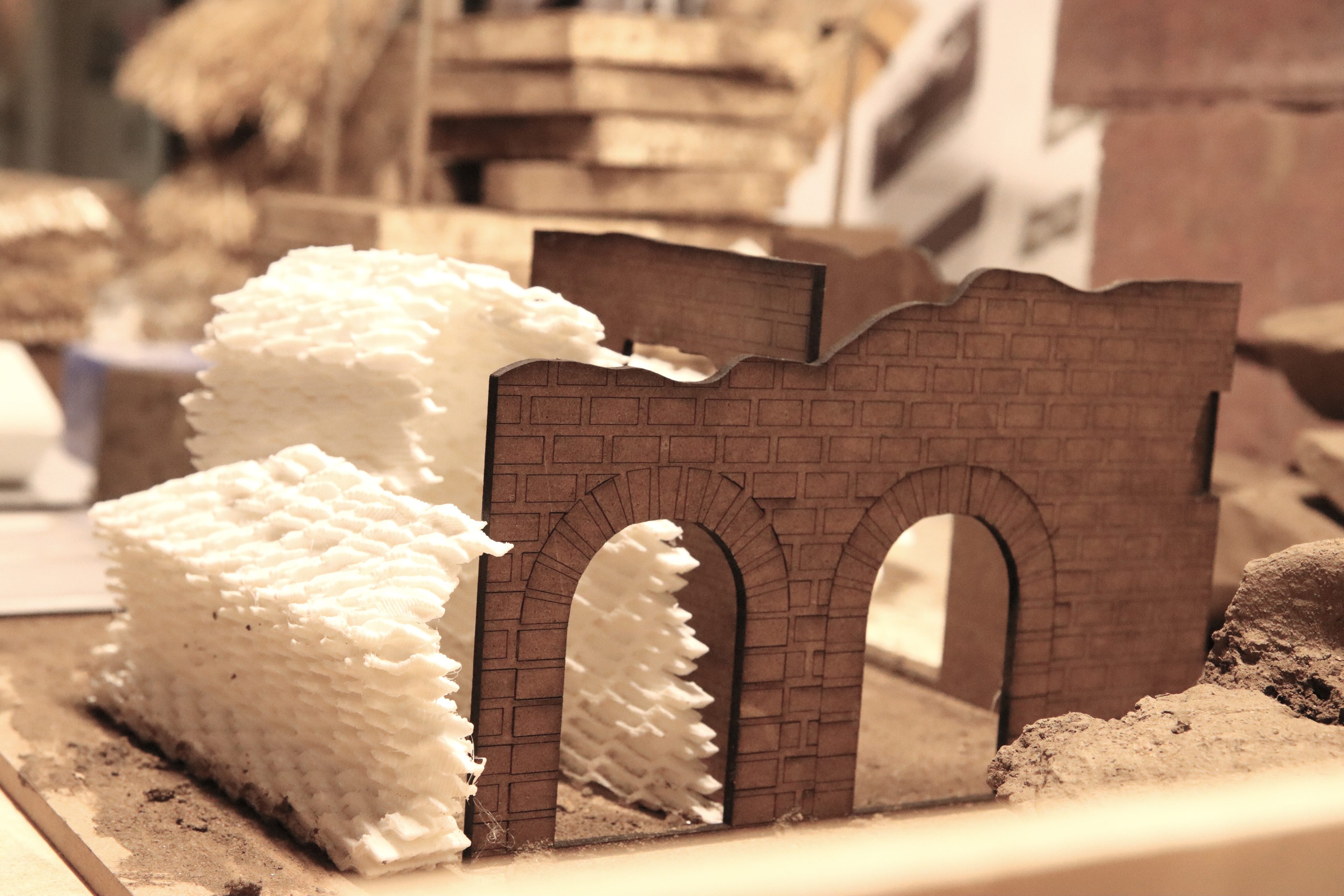
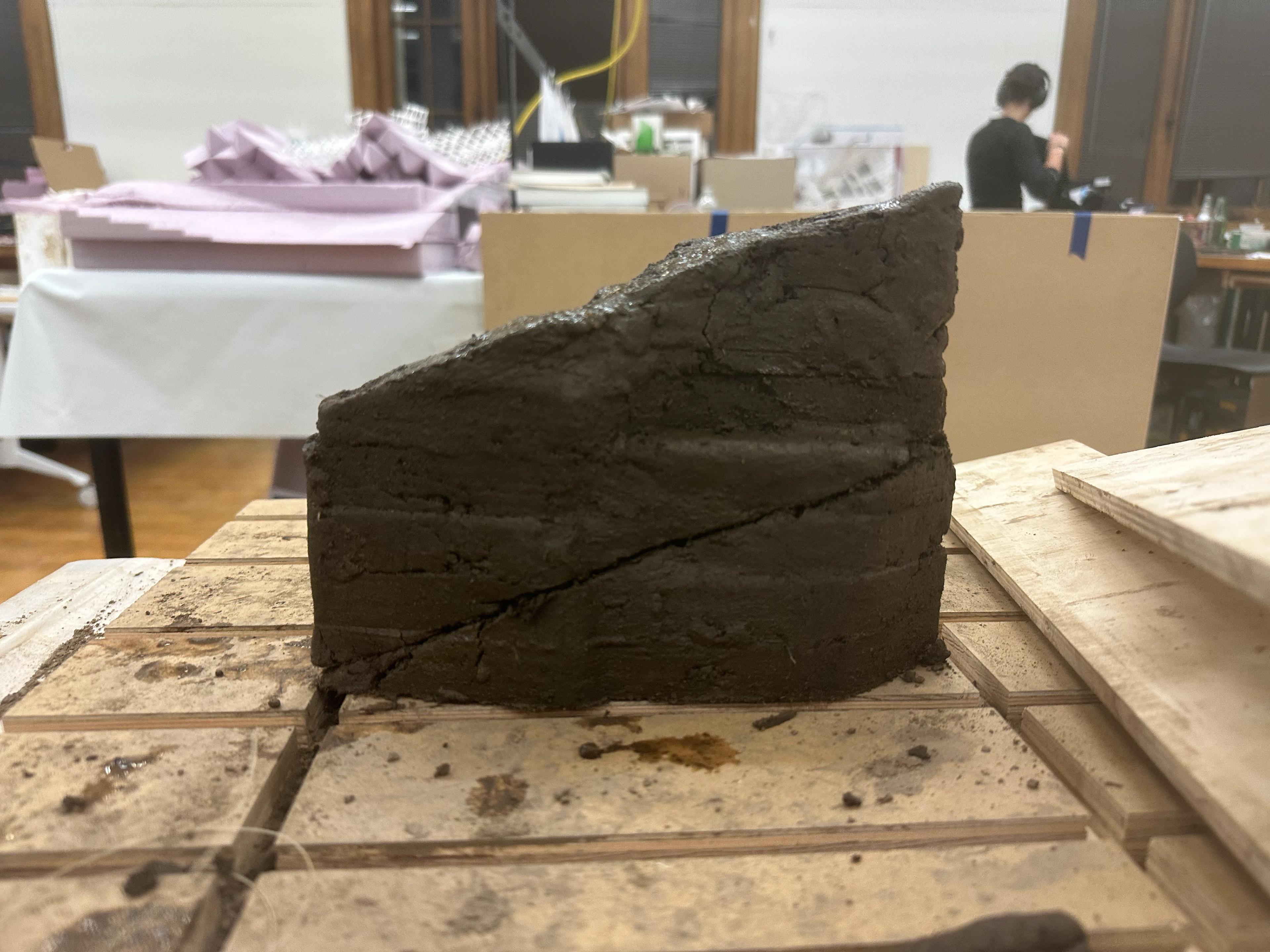
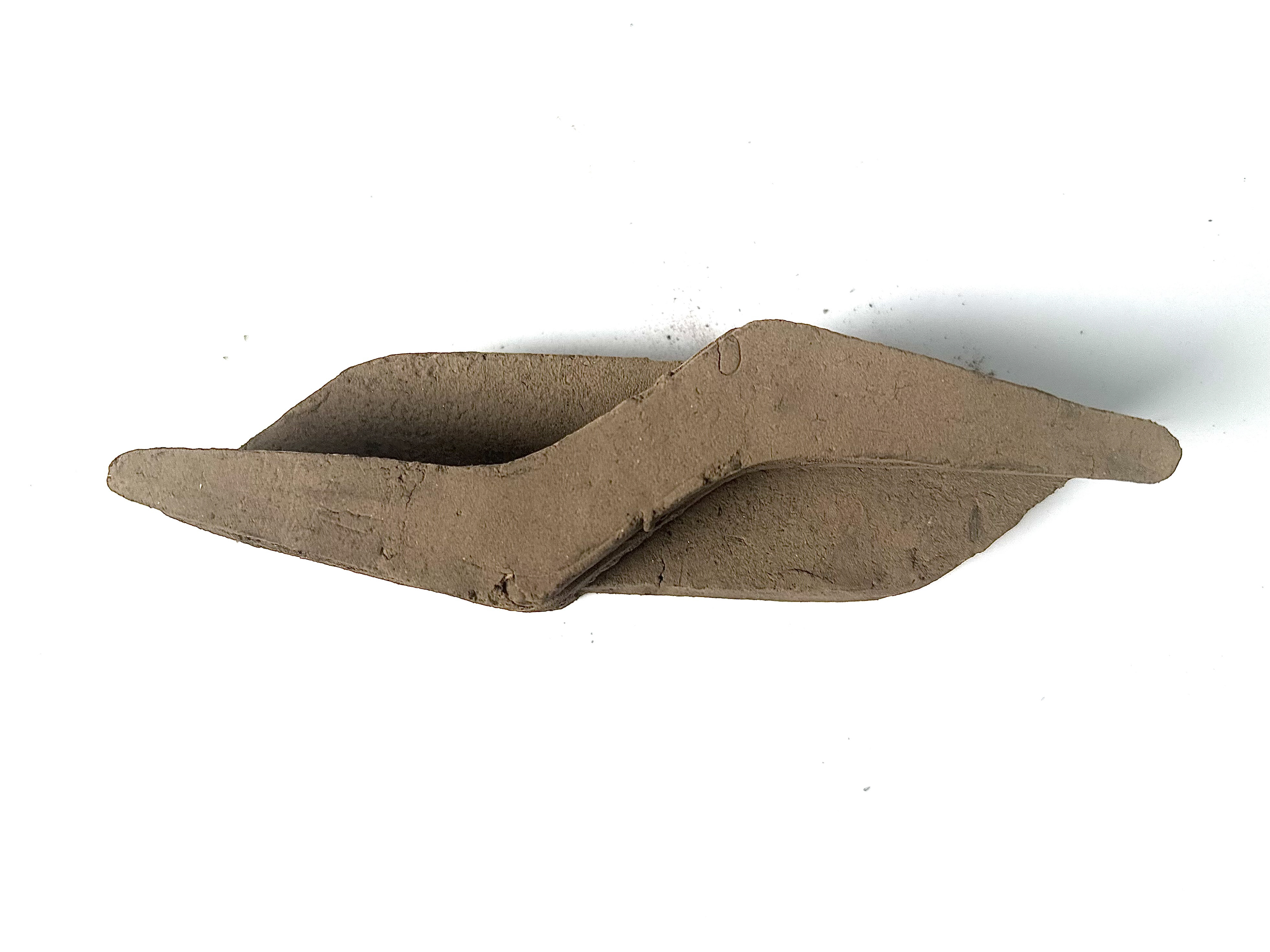
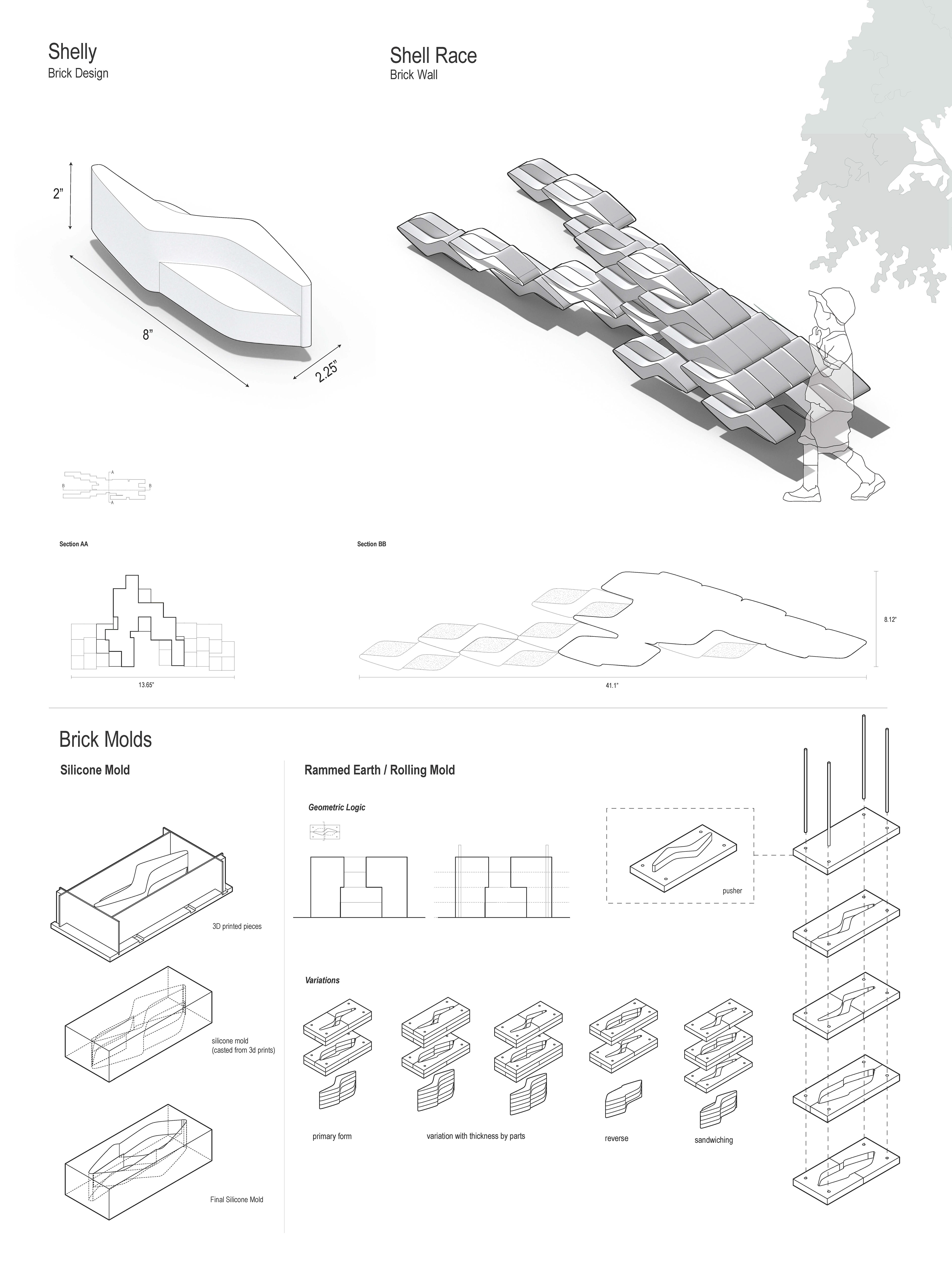
SHELLY 2-5 formed through a bottom-up approach, discovering what forms we can make from material, more specifically mud, rather than designing a form and then picking material. From the brick Shelly designed in collaboration with Mahika Singh and Guene Mao, I explored making variations of this brick through planar cuts and developed a handheld string cutting mold, inspired by clay cutting with string, followed by the possibilities and combinations the cut variations could produce and their limitations.
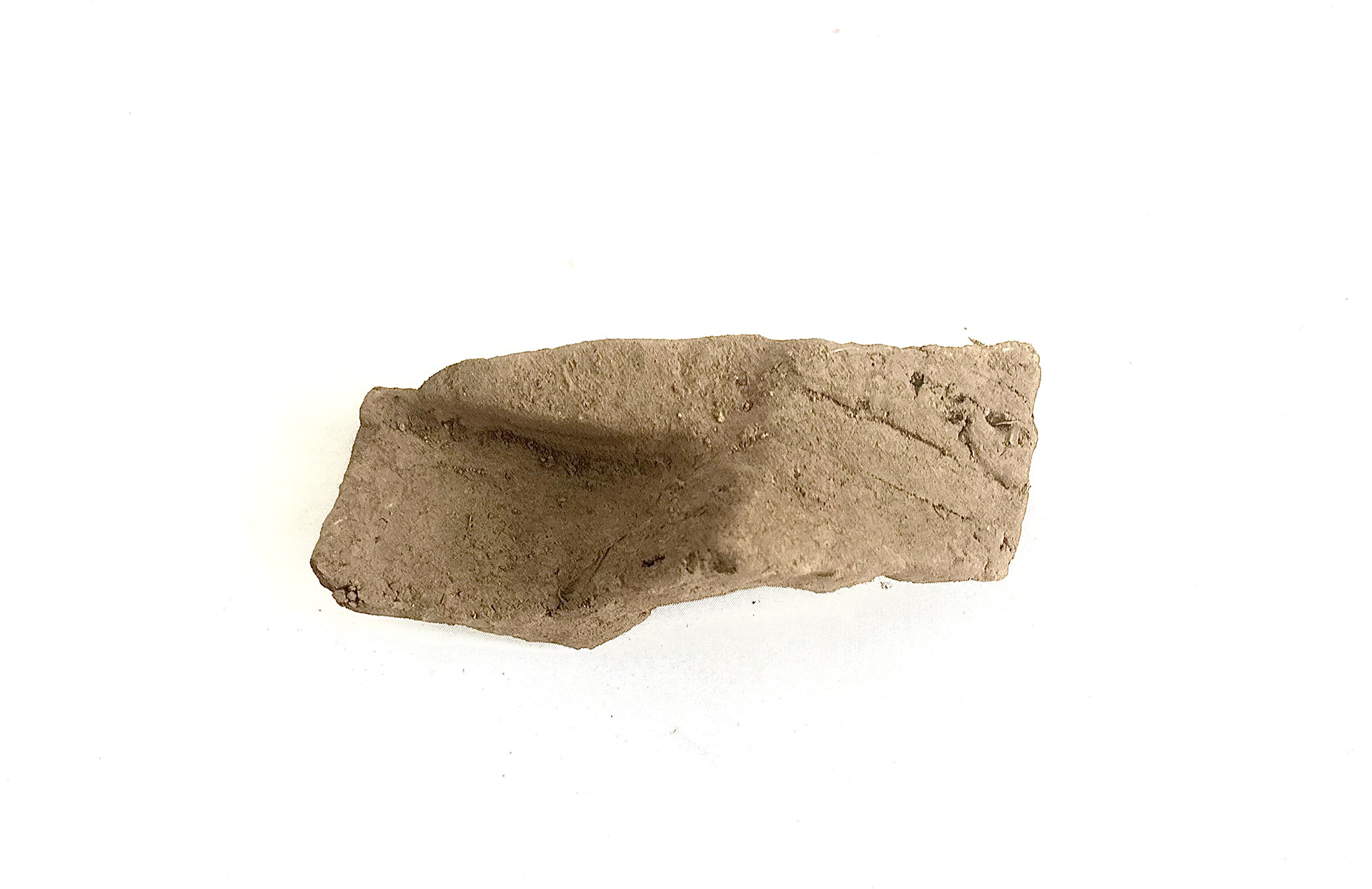
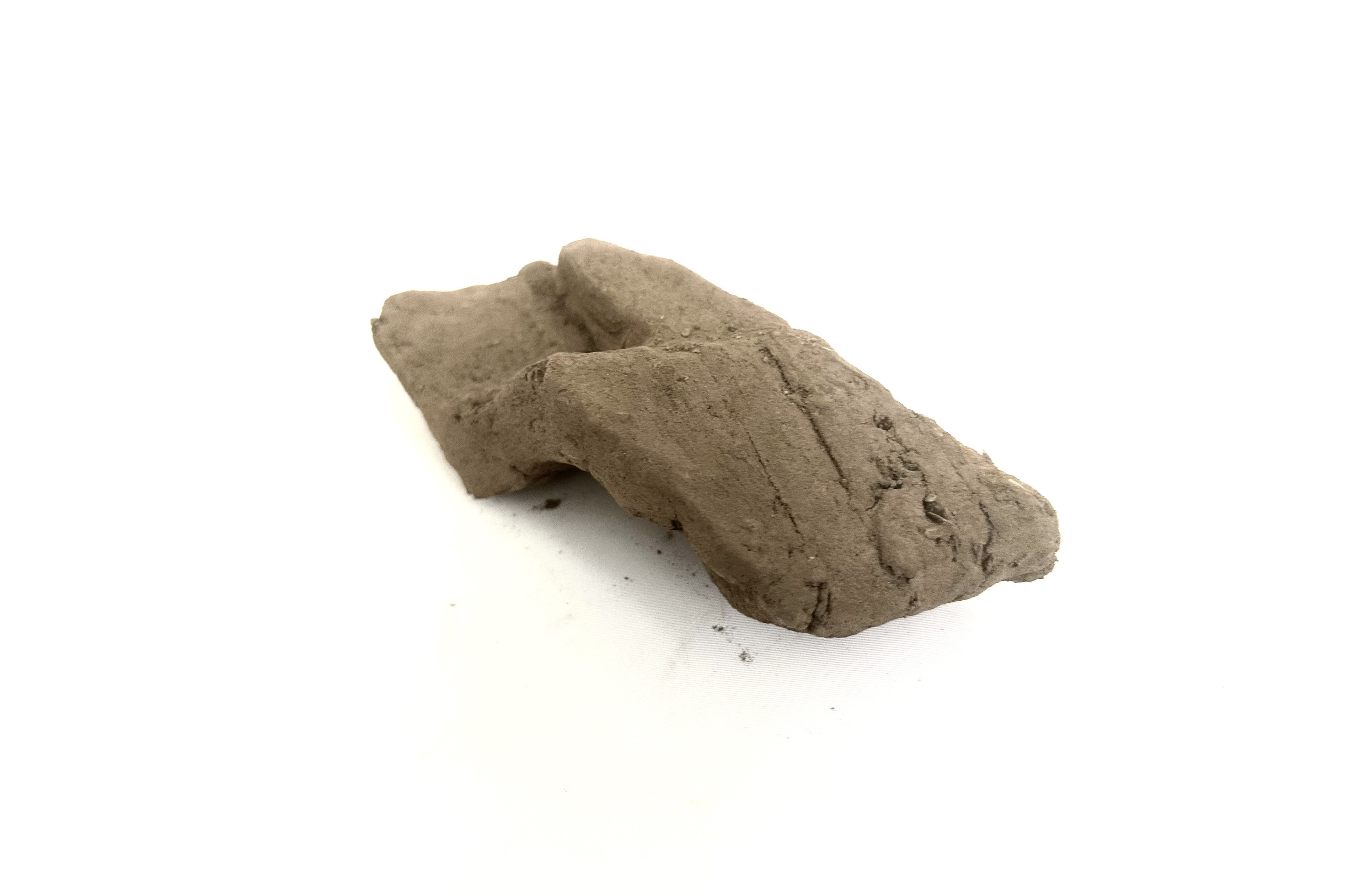
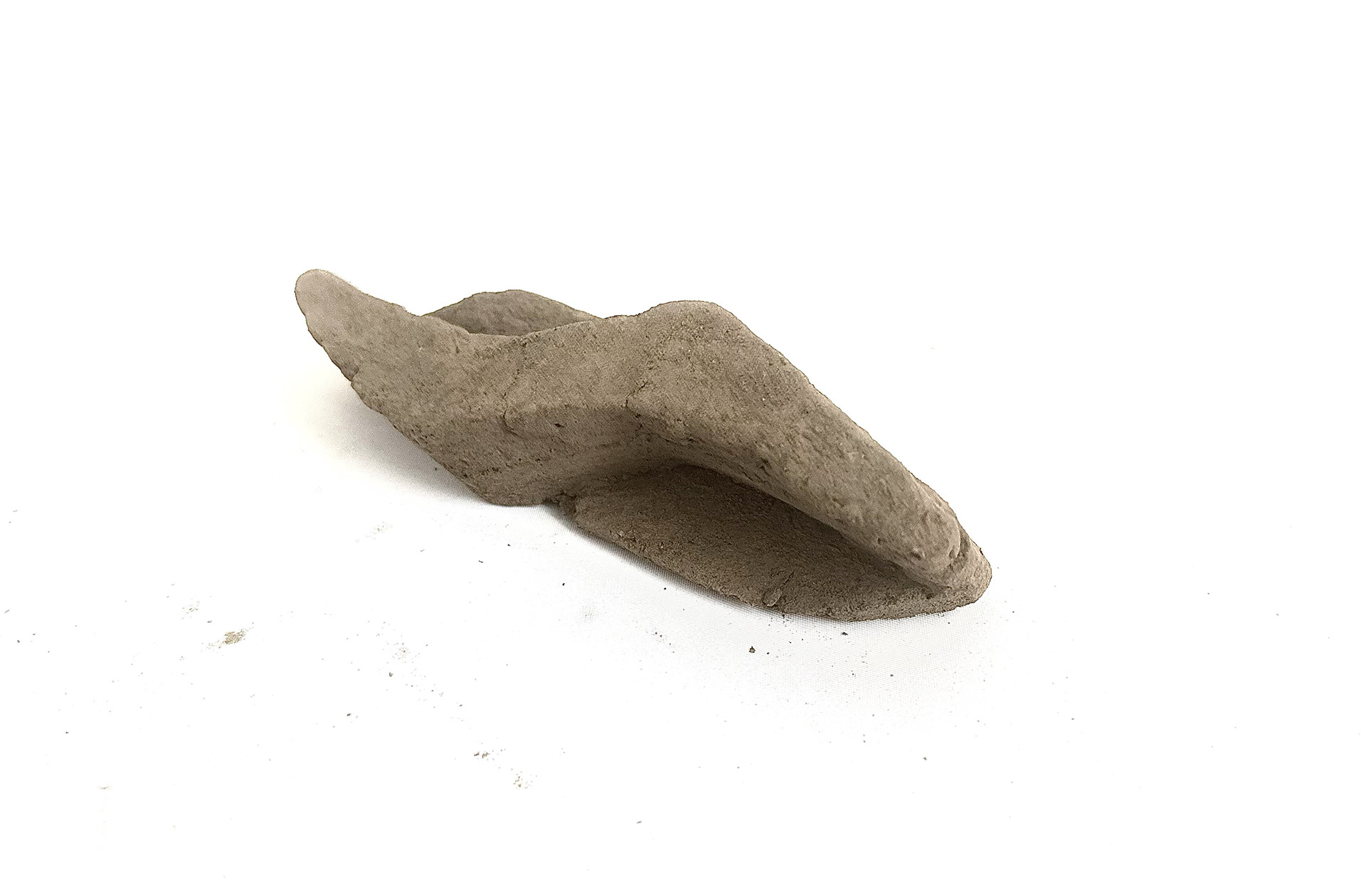
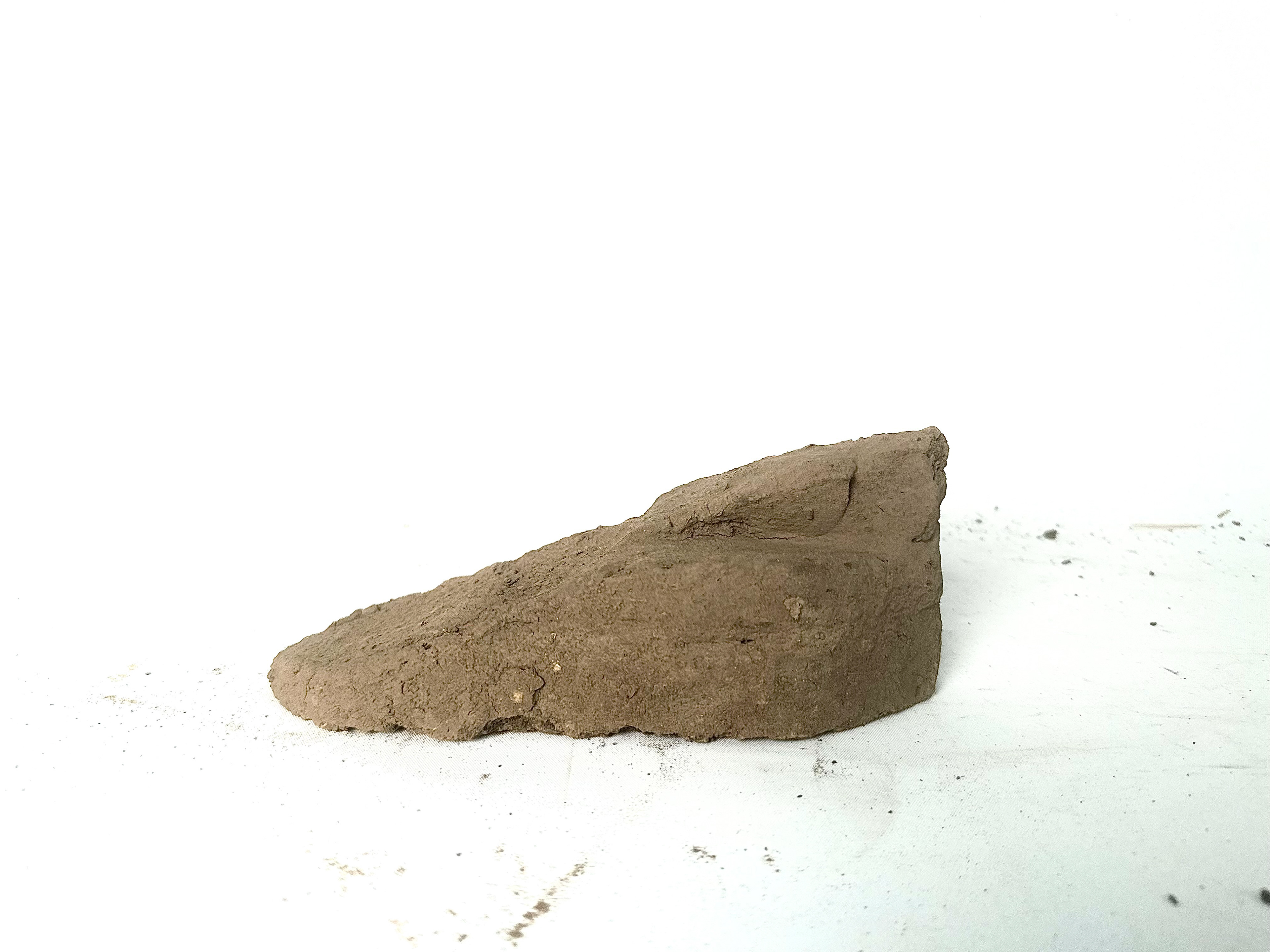
RAMMED EARTH MOLD
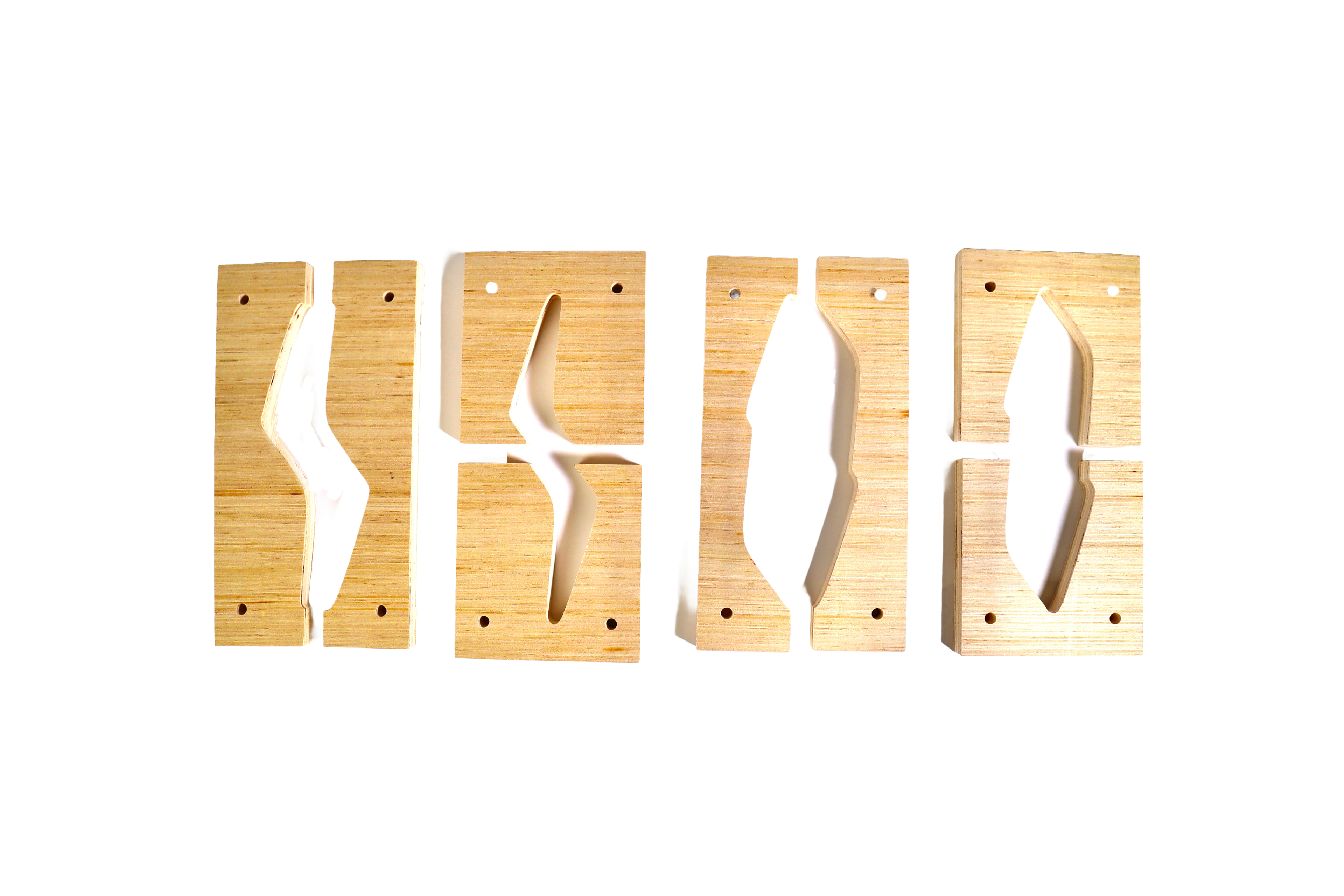
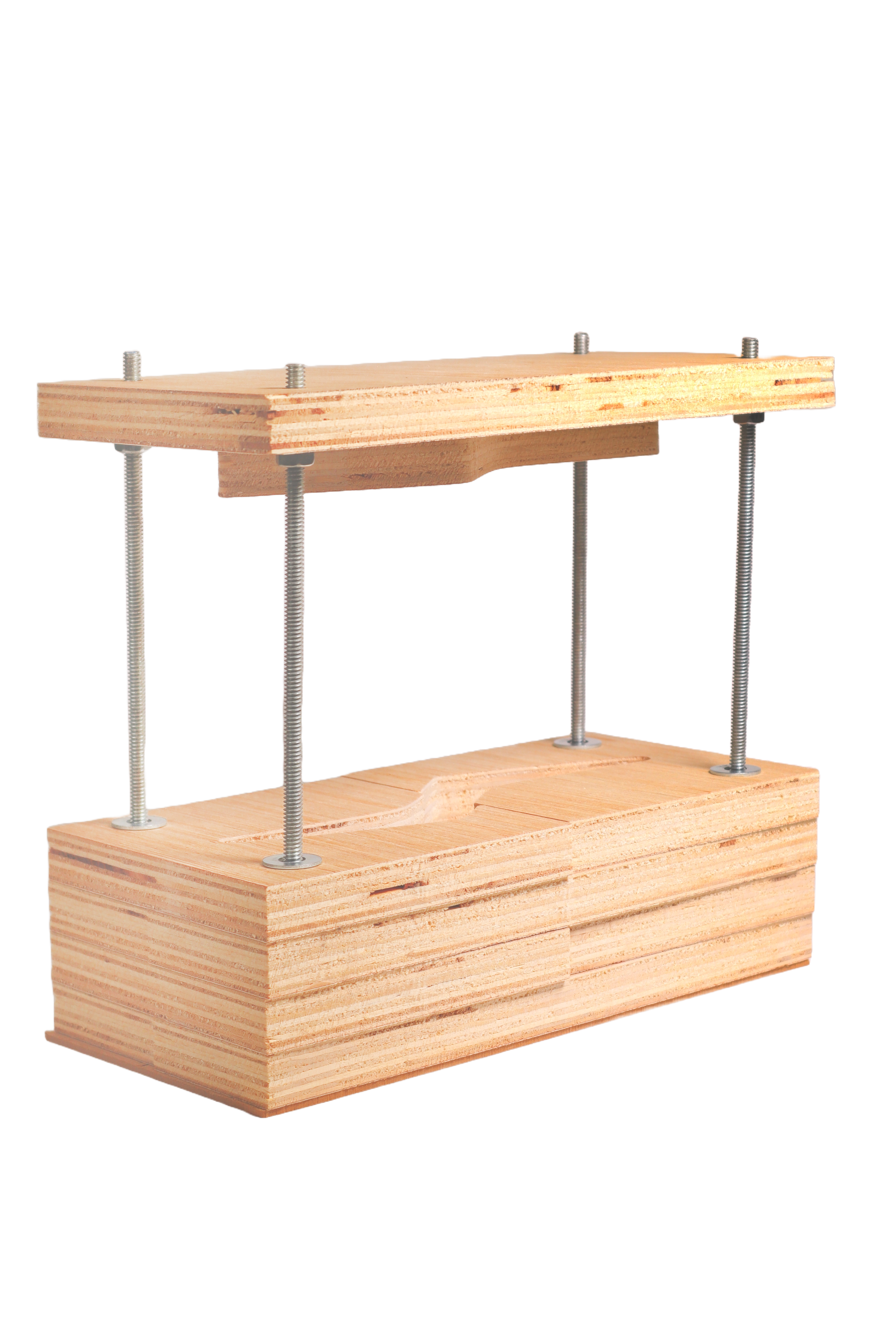
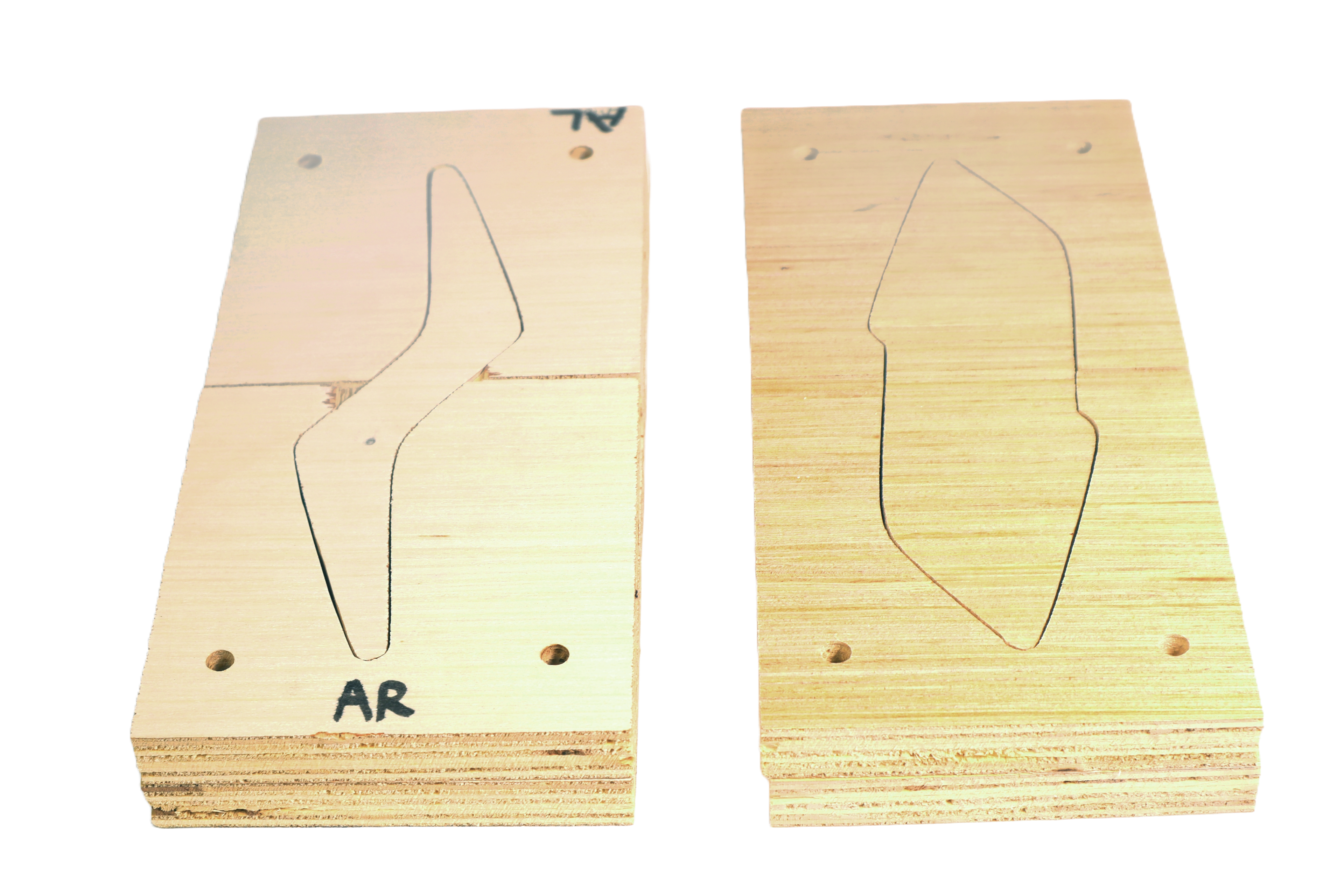
Inspired by the s-shaped hooks, this brick was designed and fabricated out of rammed earth using a CNC-milled mold. The height and depth of the brick can be controlled depending on which layers one uses when ramming the earth. We wanted to develop a brick that does not look like the conventional one, but still function like one. For increasing wall sizes, we found that it is easiest to grow in the x and y direction, while adding height has more limitations, as it requires two bricks to nest one, and even then it goes up in half the height of our brick.
FABRICATION
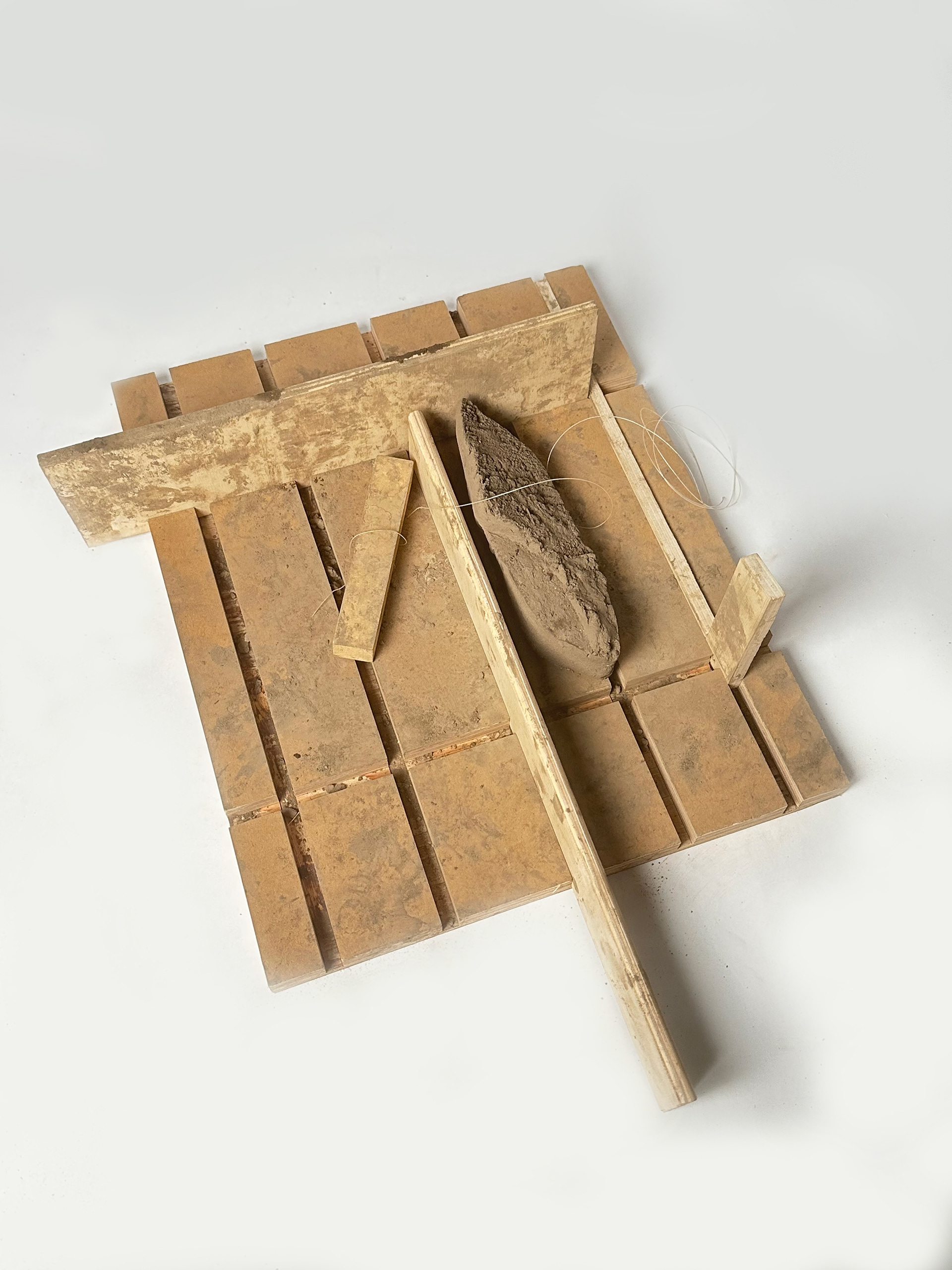
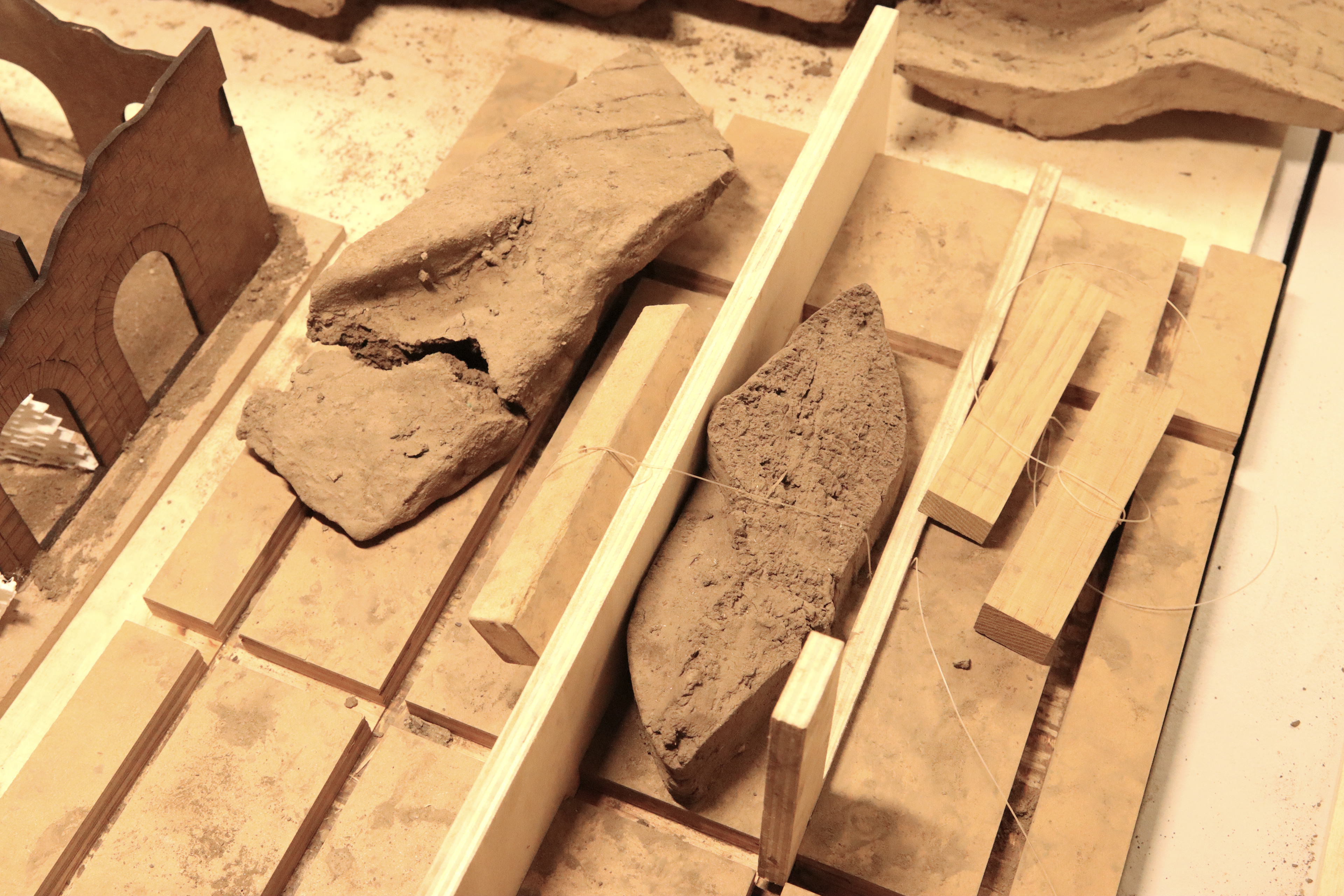
When it came fabricating the mold and making the variations physically, it was originally going to be an iteration of the original rammed earth mold and introducing some cuts to it. However, there was an alternative: using wire to cut the bricks instead, mimicking the planar cuts I did in Rhino to get the variations. This took some attempts, learning where to cut the brick, how far the planks should be, what wire worked, and tensioning. The composition also had to be as clean as possible without fiber. I developed a base with vertical and horizontal grooves, allowing cuts that do not require the brick to rotate and deform. I would then put different height planks into these grooves to achieve the angle needed for the planar cut. This mold can be simplified or applied to other bricks with some modifications to dimensions.