Domestic
Shelters
Wild Rabbits
Stink Bugs
Ethel on Western
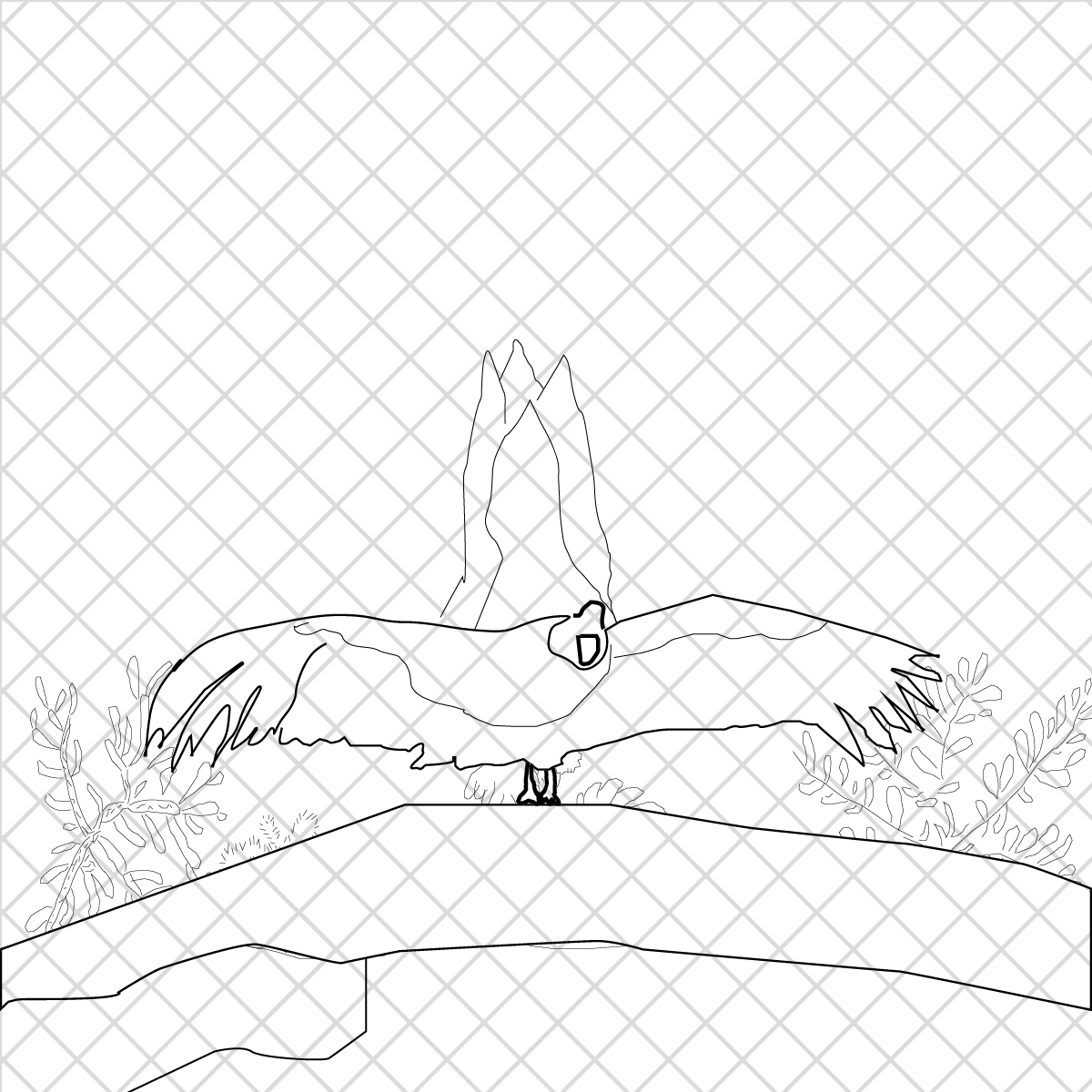
Zoo Conditions
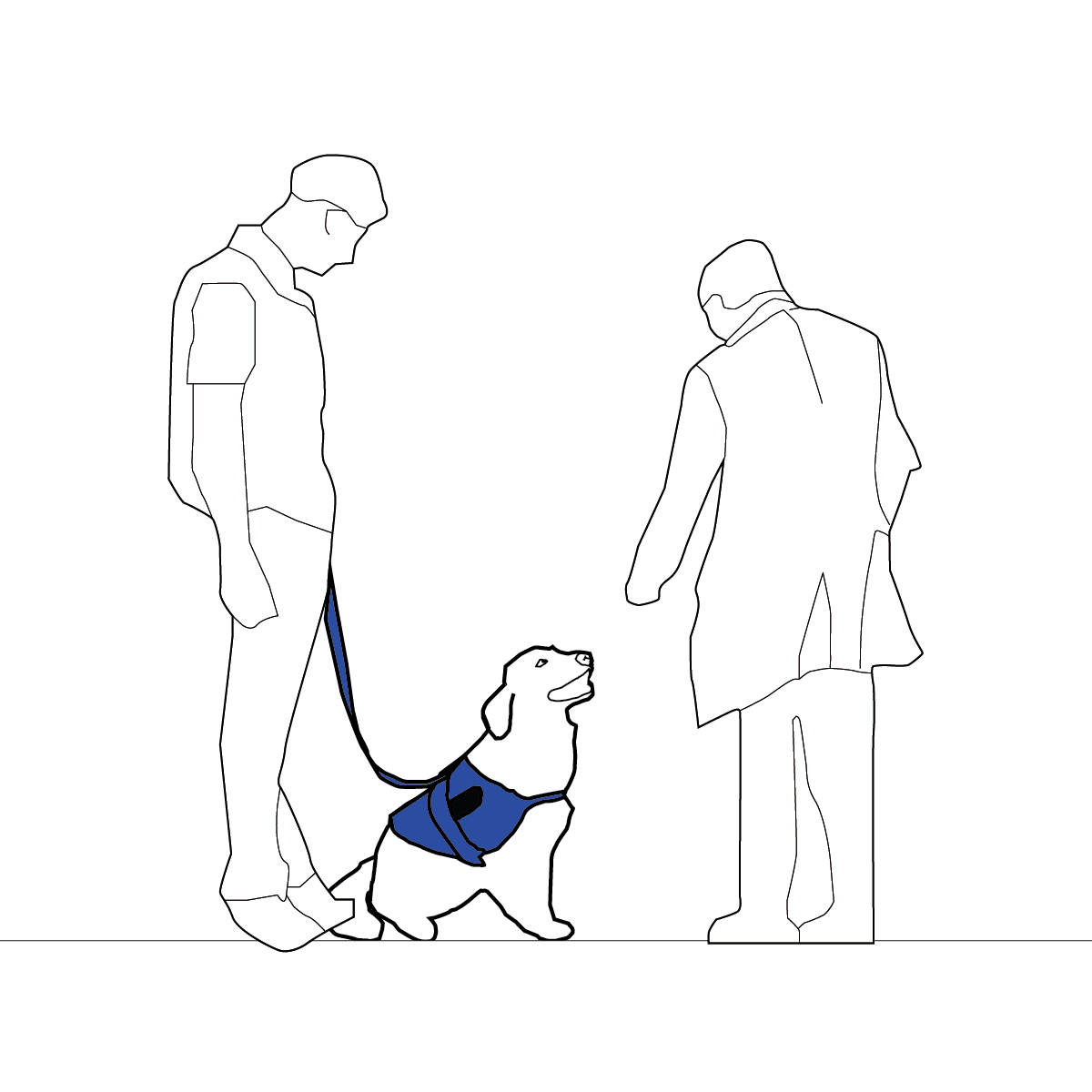
Service Animals
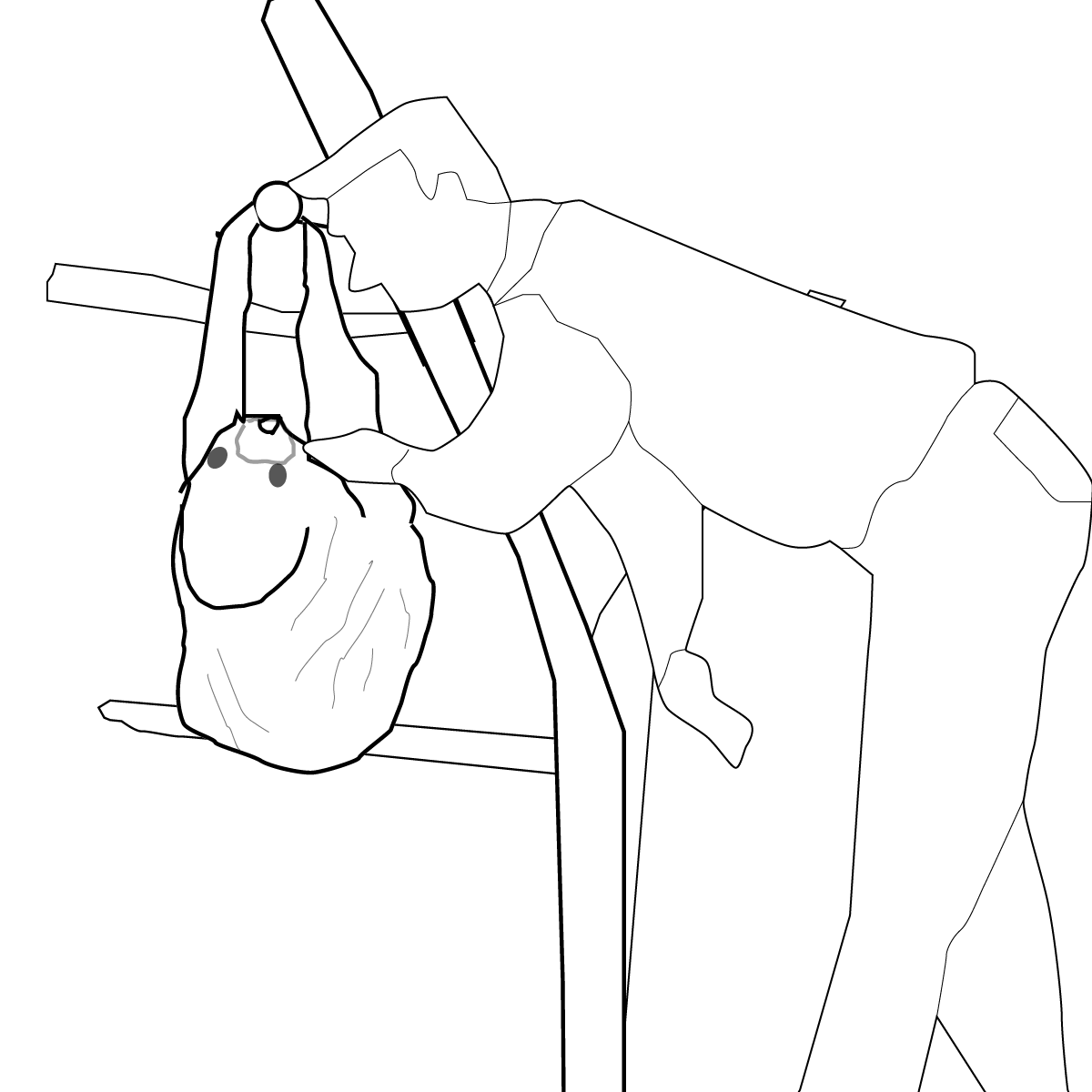
Petting Zoos
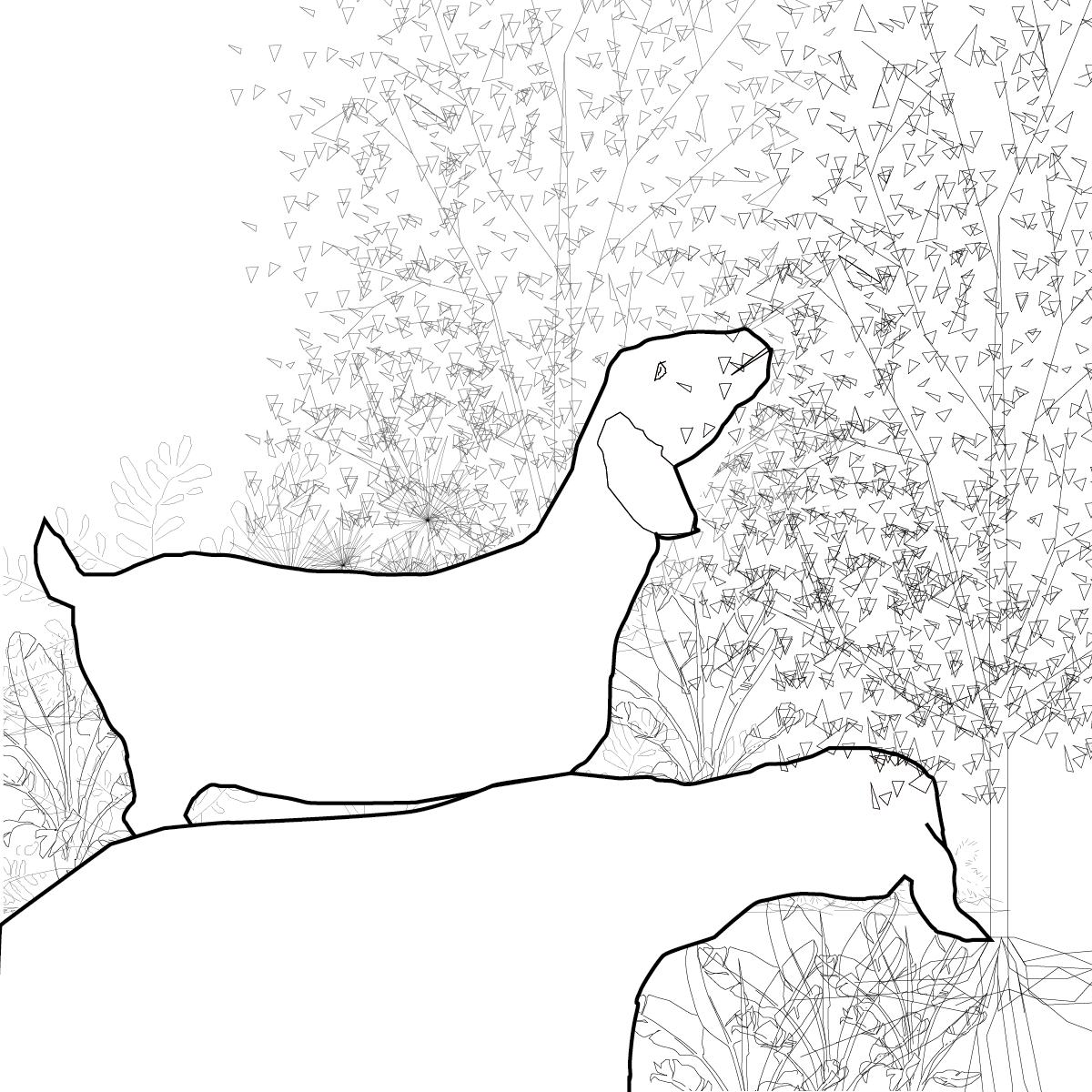
Sheep Scaping
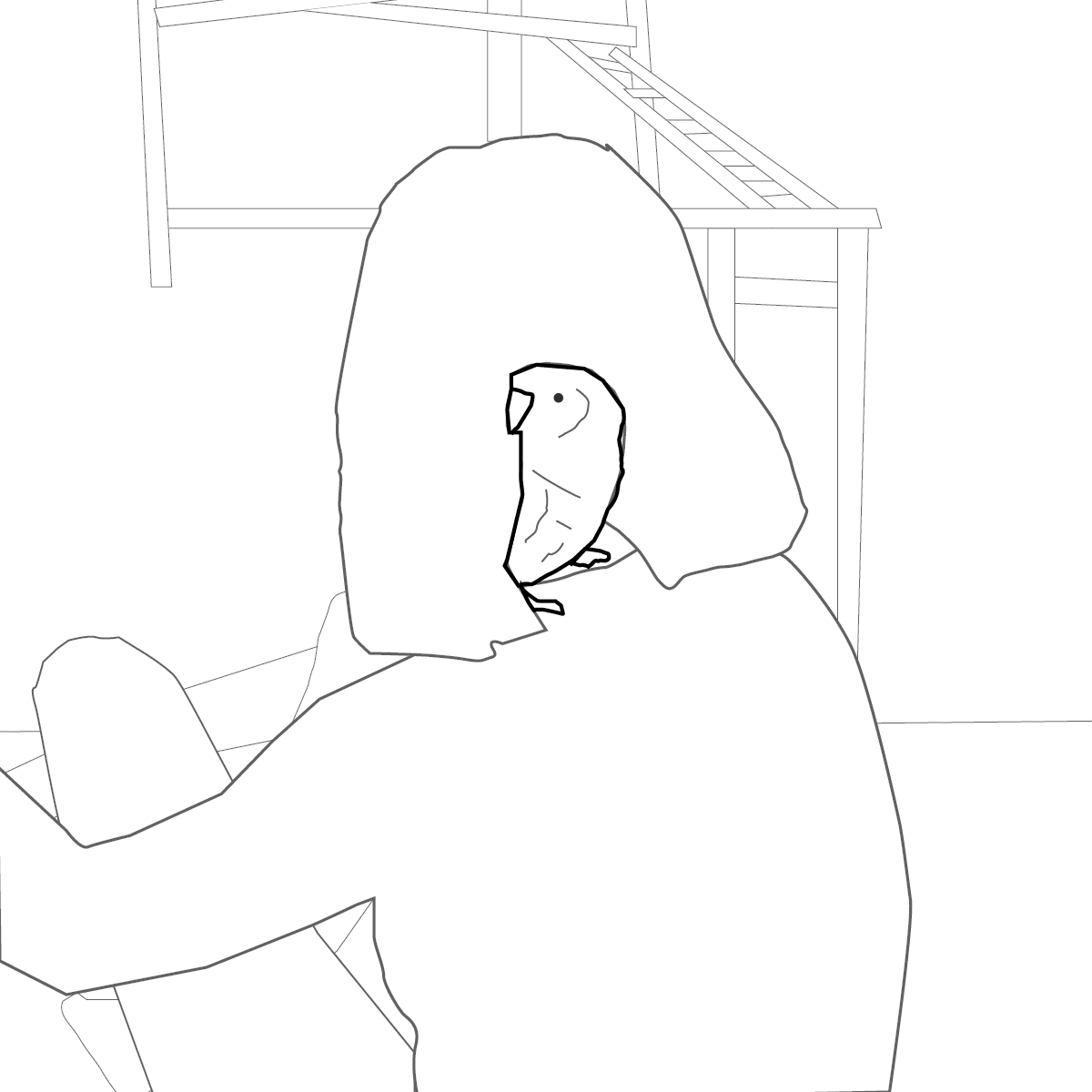
Birds
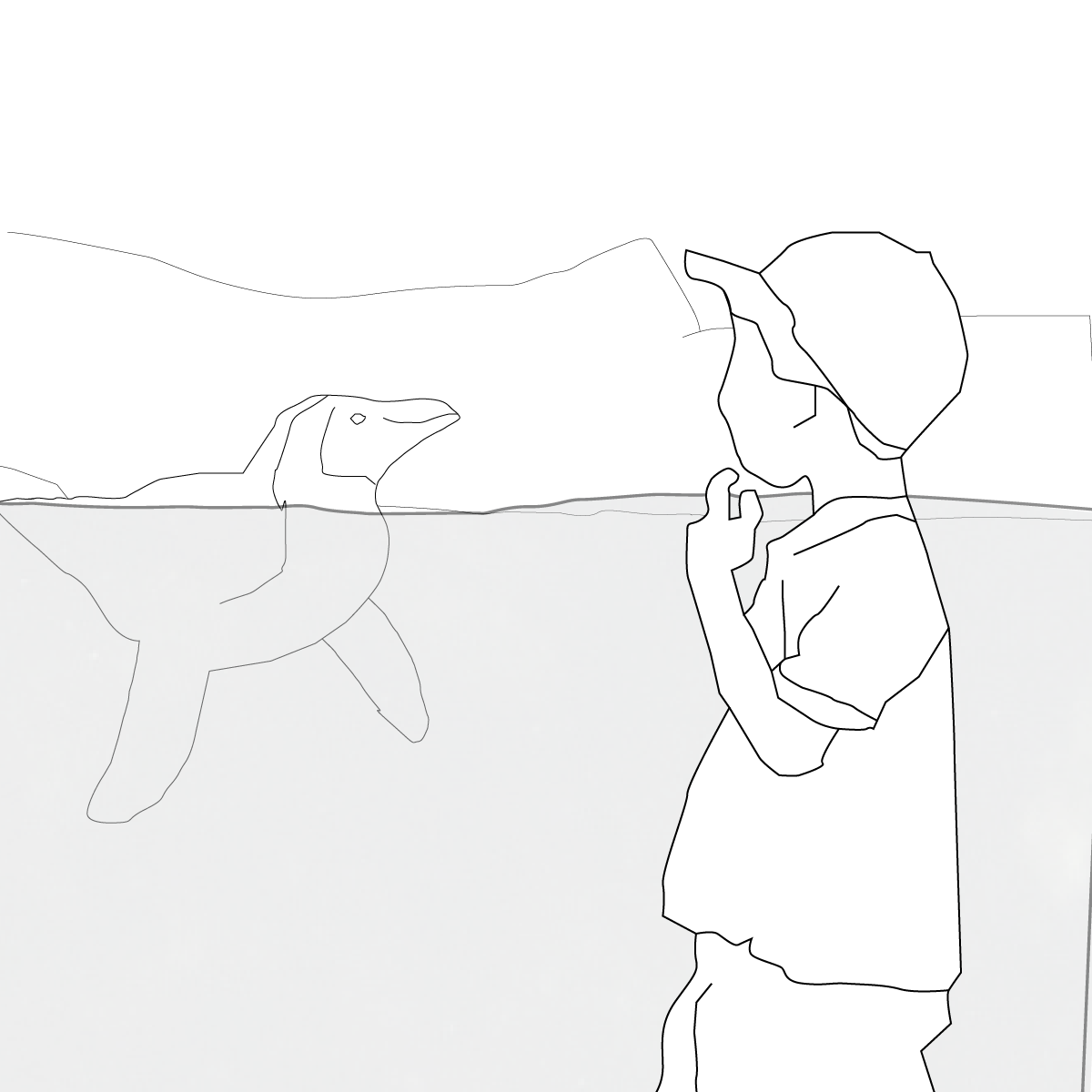
Behind Glass
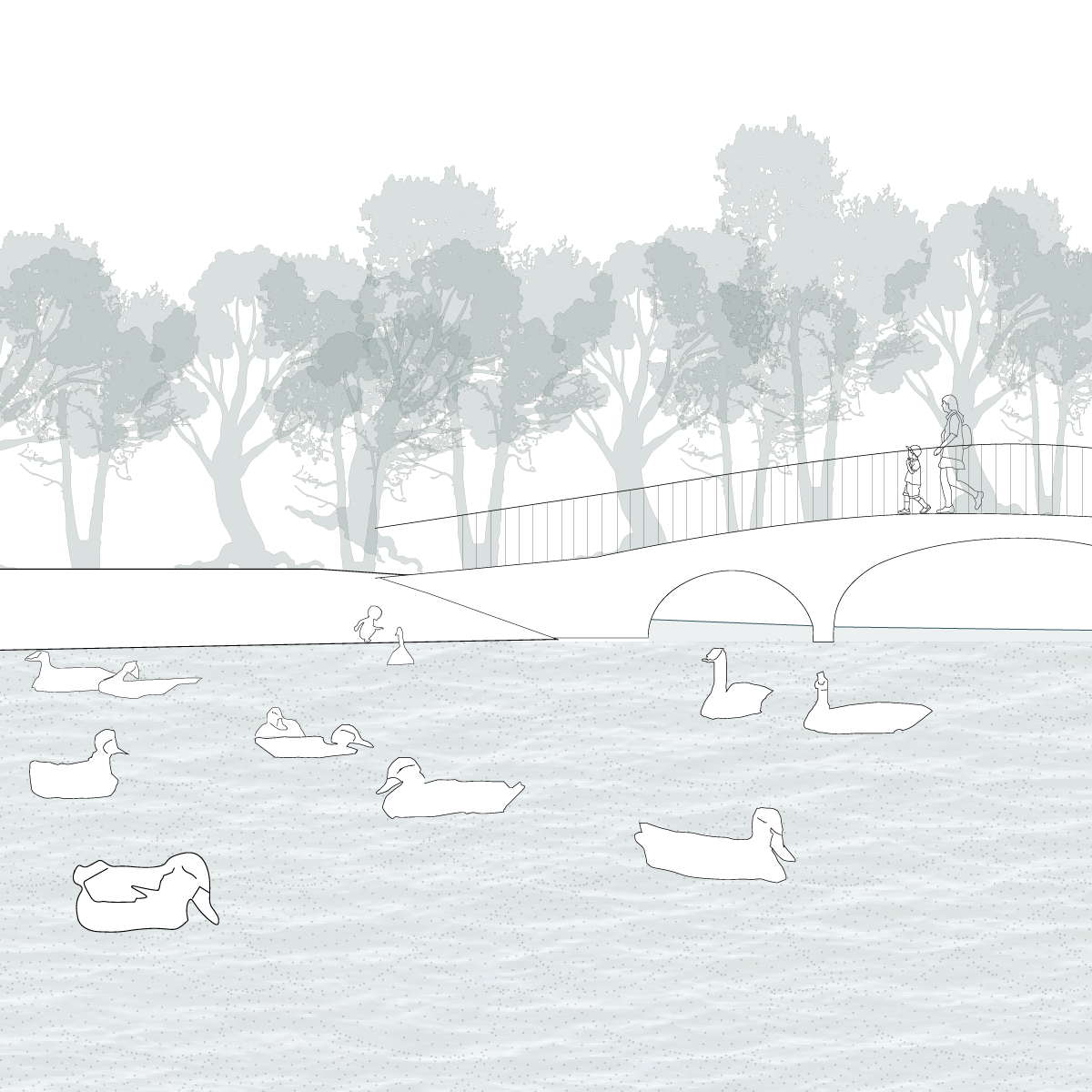
Ducks At the North Shore
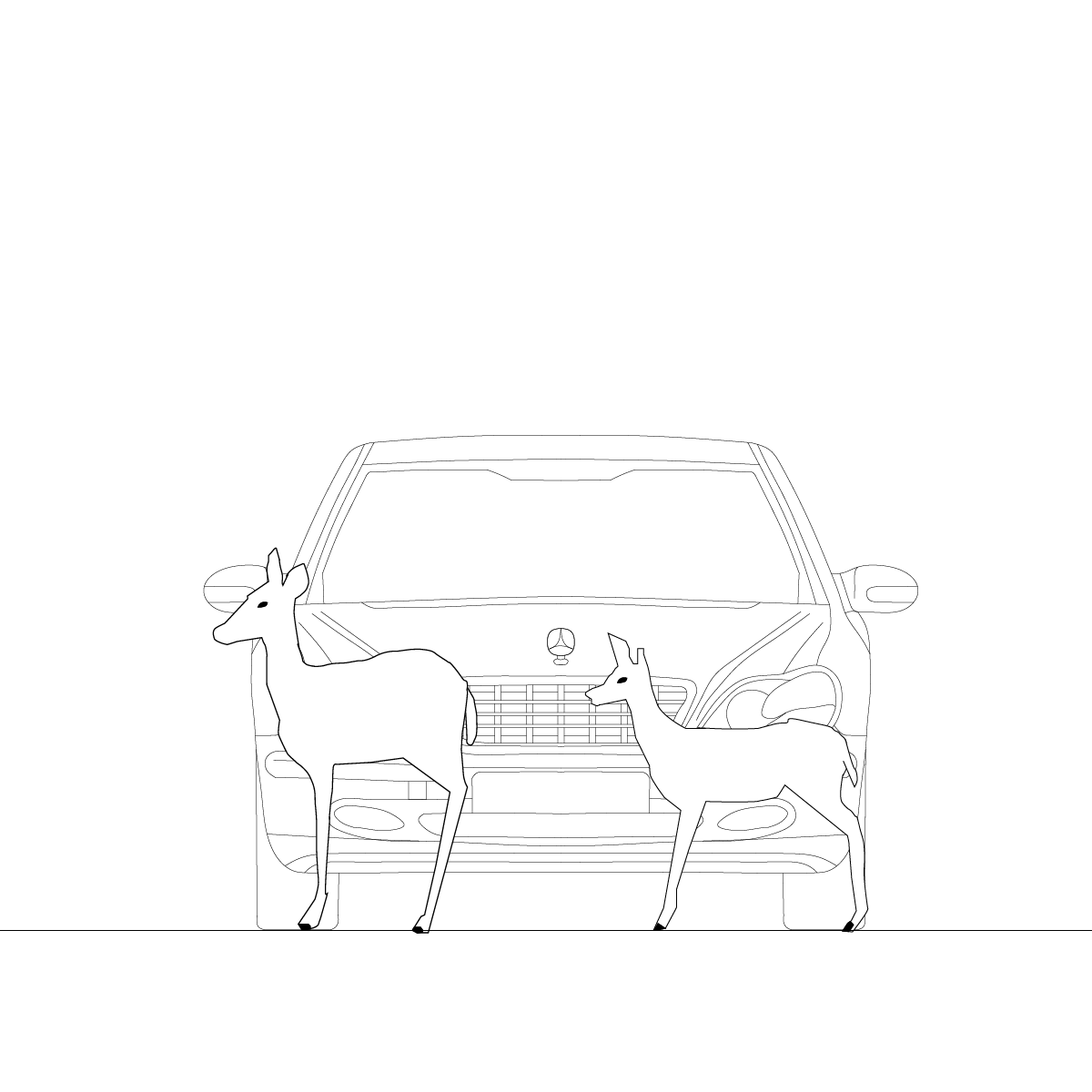
Deer in the Urban City
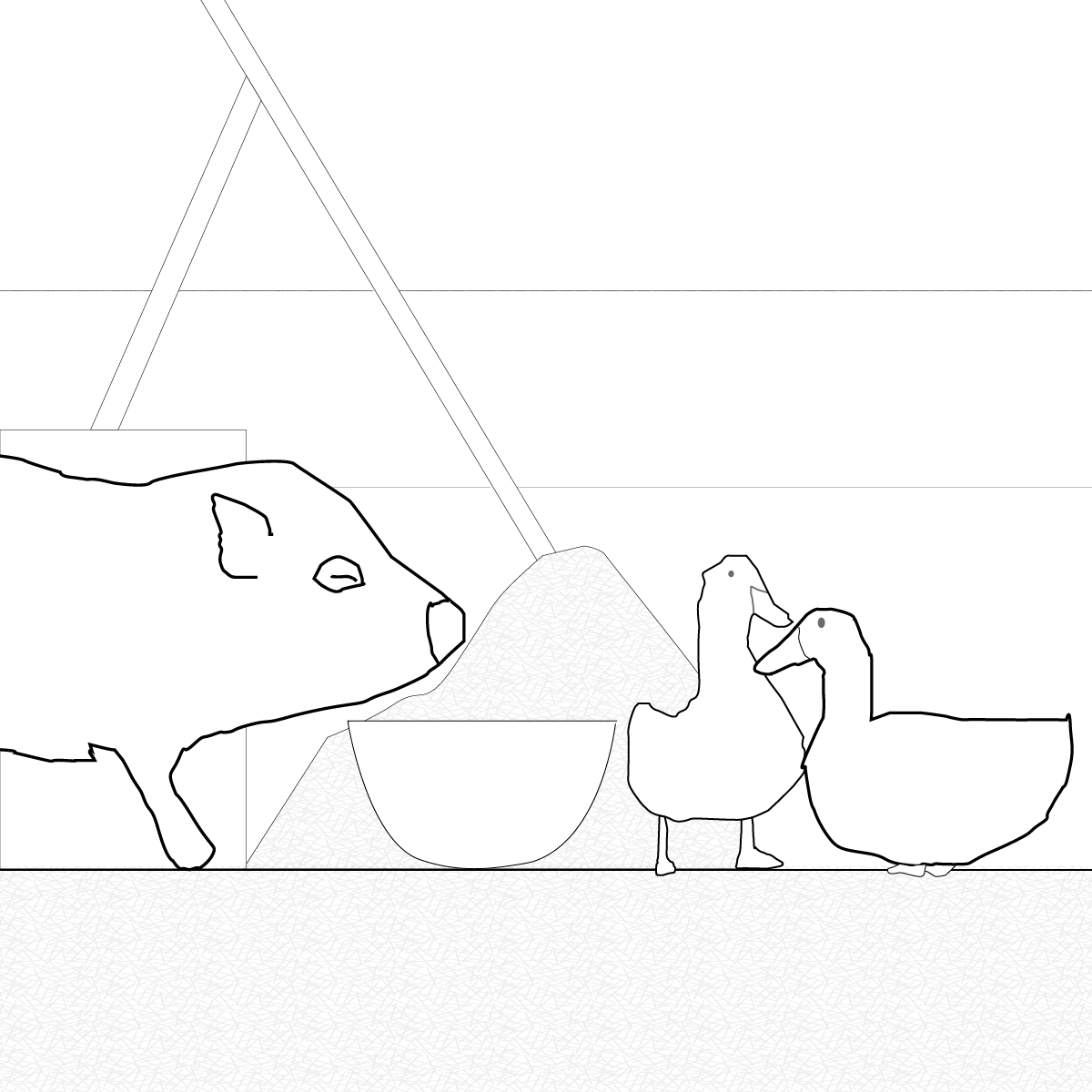
Farms
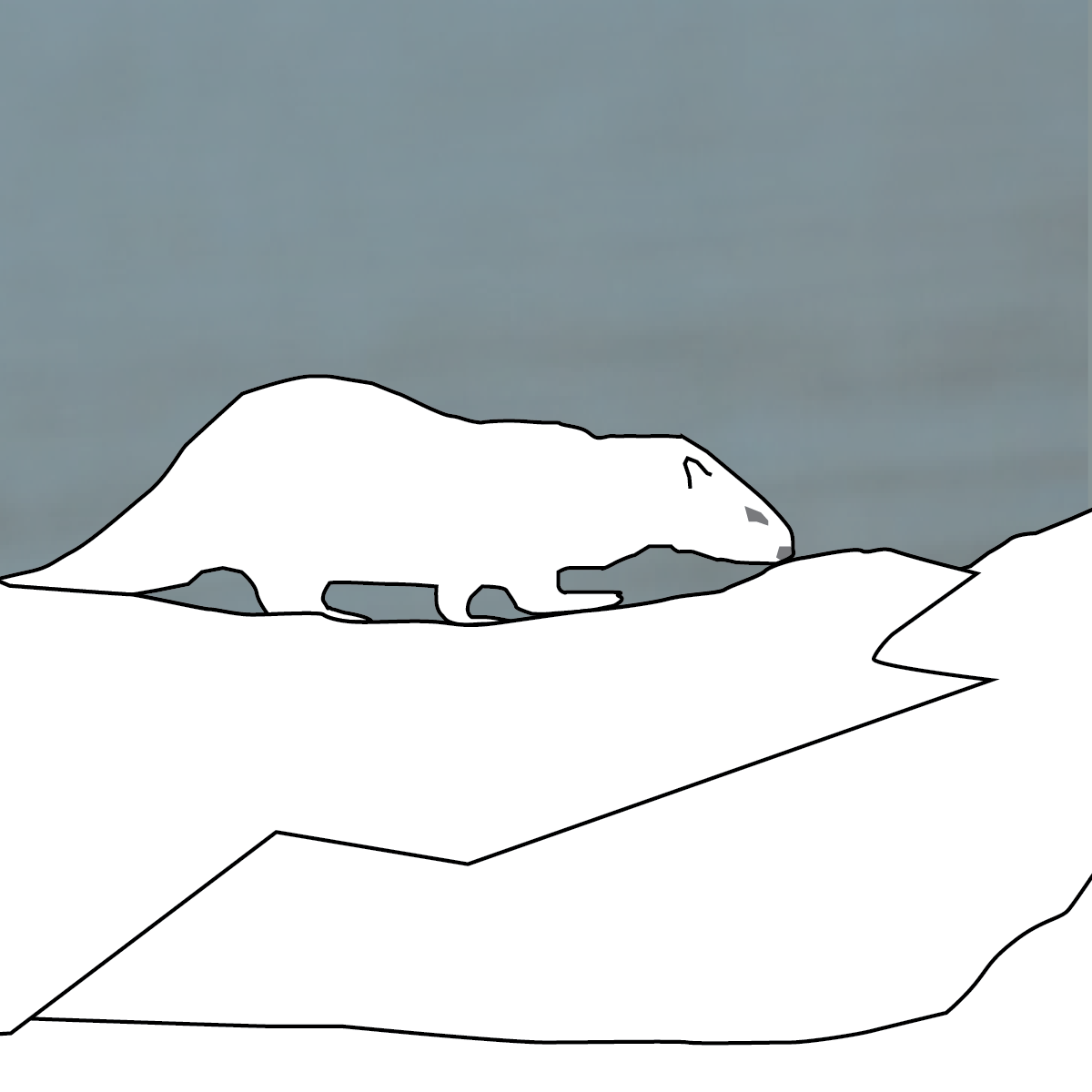
Otters Returning
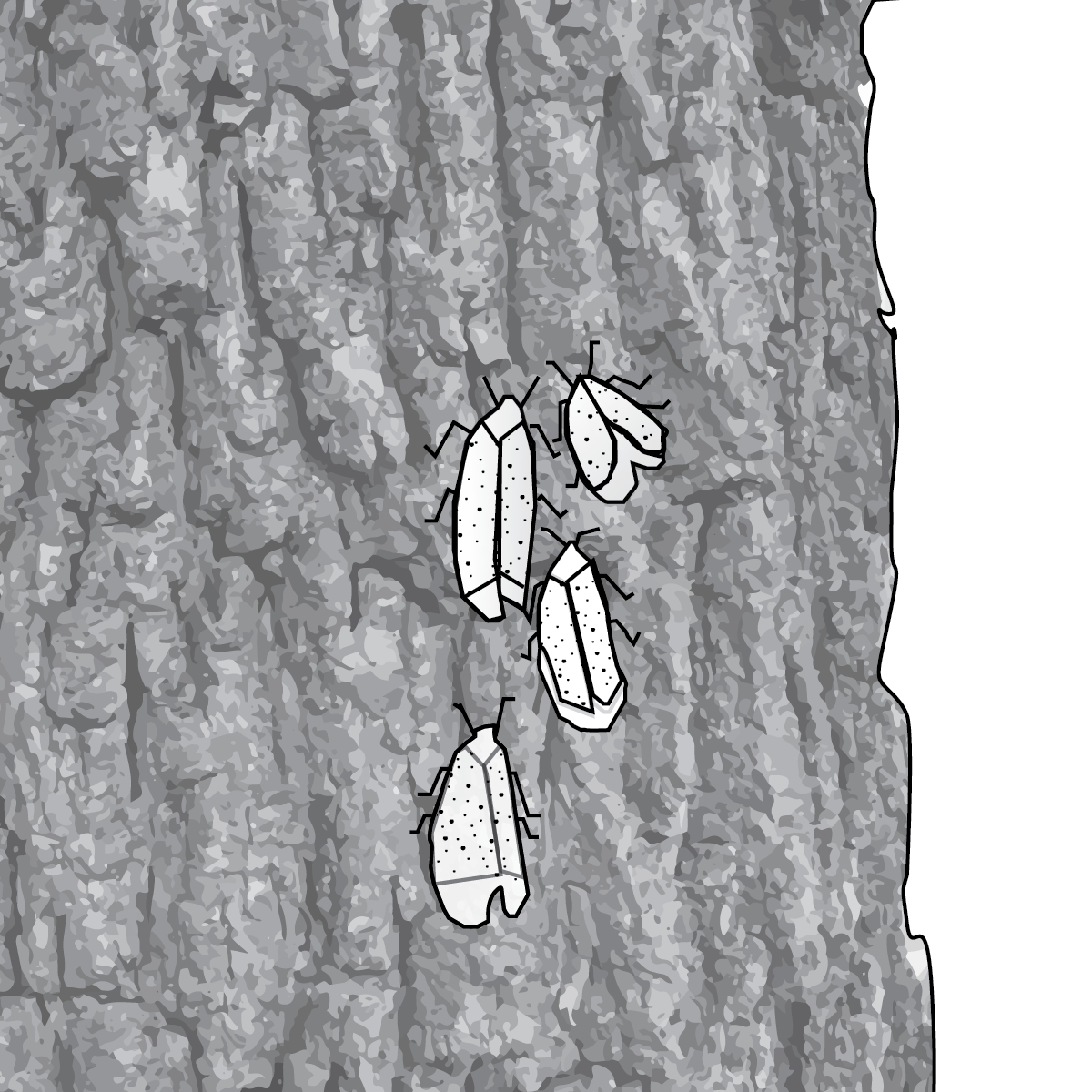
Lantern Fly Invasion
Type: COMMUNITY / RESIDENTIAL
Location: Pittsburgh, PA (Brunot Island and Duquesne Incline)
Partnered with Mahika Singh
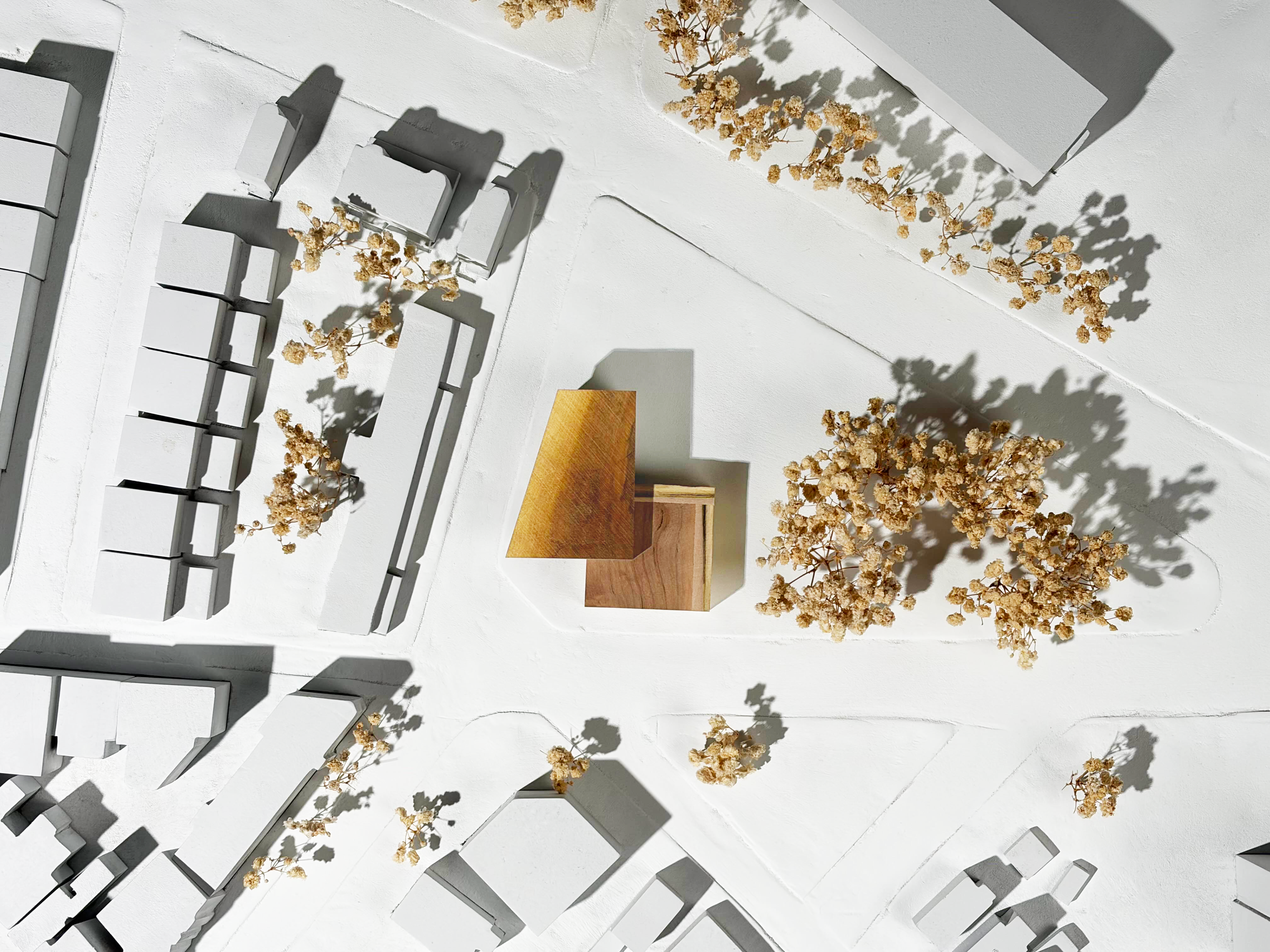
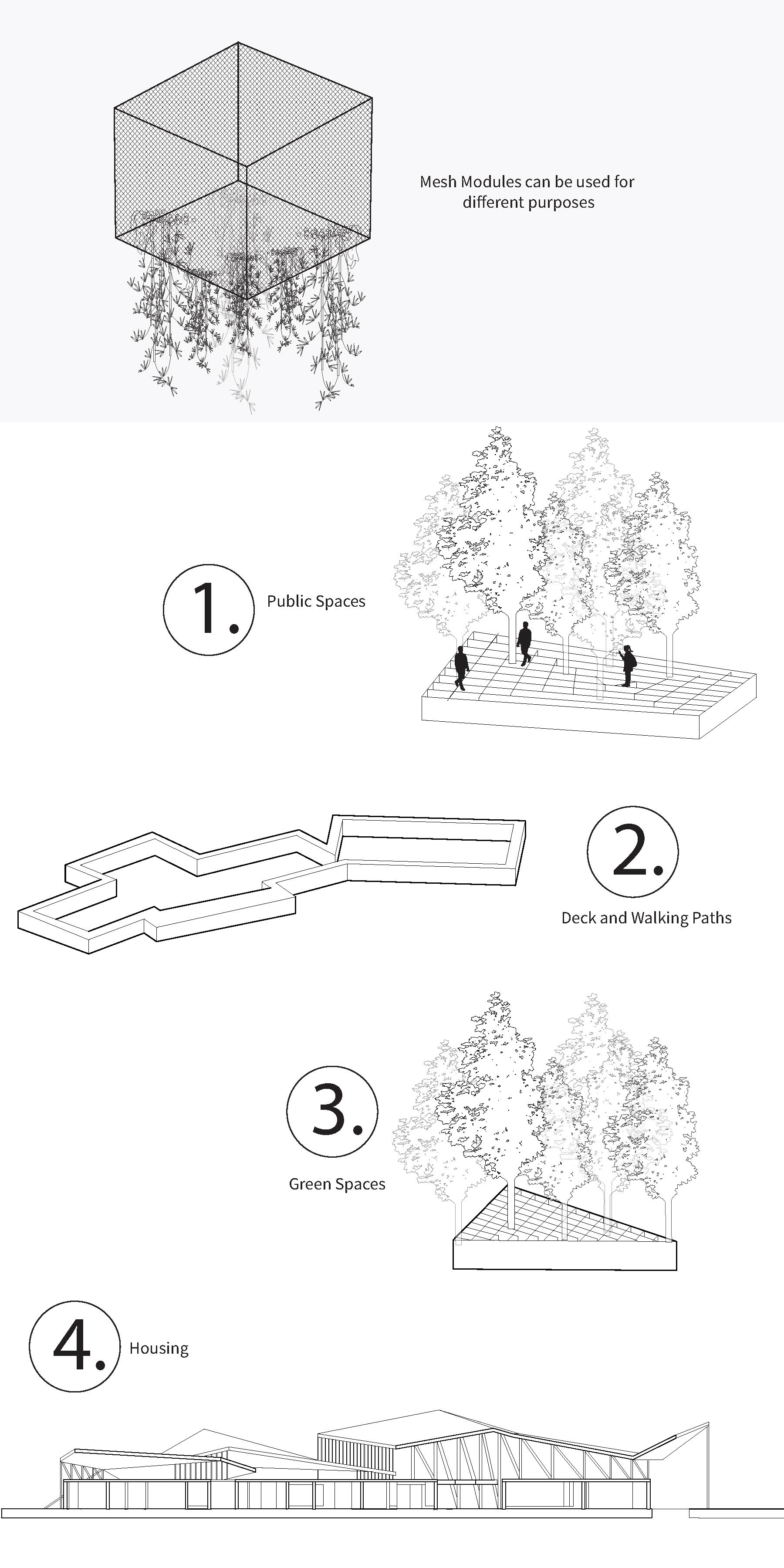
MESH is an exploration of a shift on the traditional take on building for humans first and considering the environment equally in our design, if not more. We focus on spotlighting the animals of Pittsburgh and building for them as much as we are building for humans on the sites Brunot Island and Duquesne Incline, while sustaining a closed loop system of CLT usage.
Usually, the only spaces we can see animals are the invasive species, where we do not want to interact with them, or in enclosed spaces, such as the zoo or aquarium. Pittsburgh locals claim that due to overpopulation, deer are invading the urban environment and residential areas, when we could argue humans are the ones who invaded their homes first. MESH aims to give back the environment to the animals, or even switch perspectives between humans and animals.
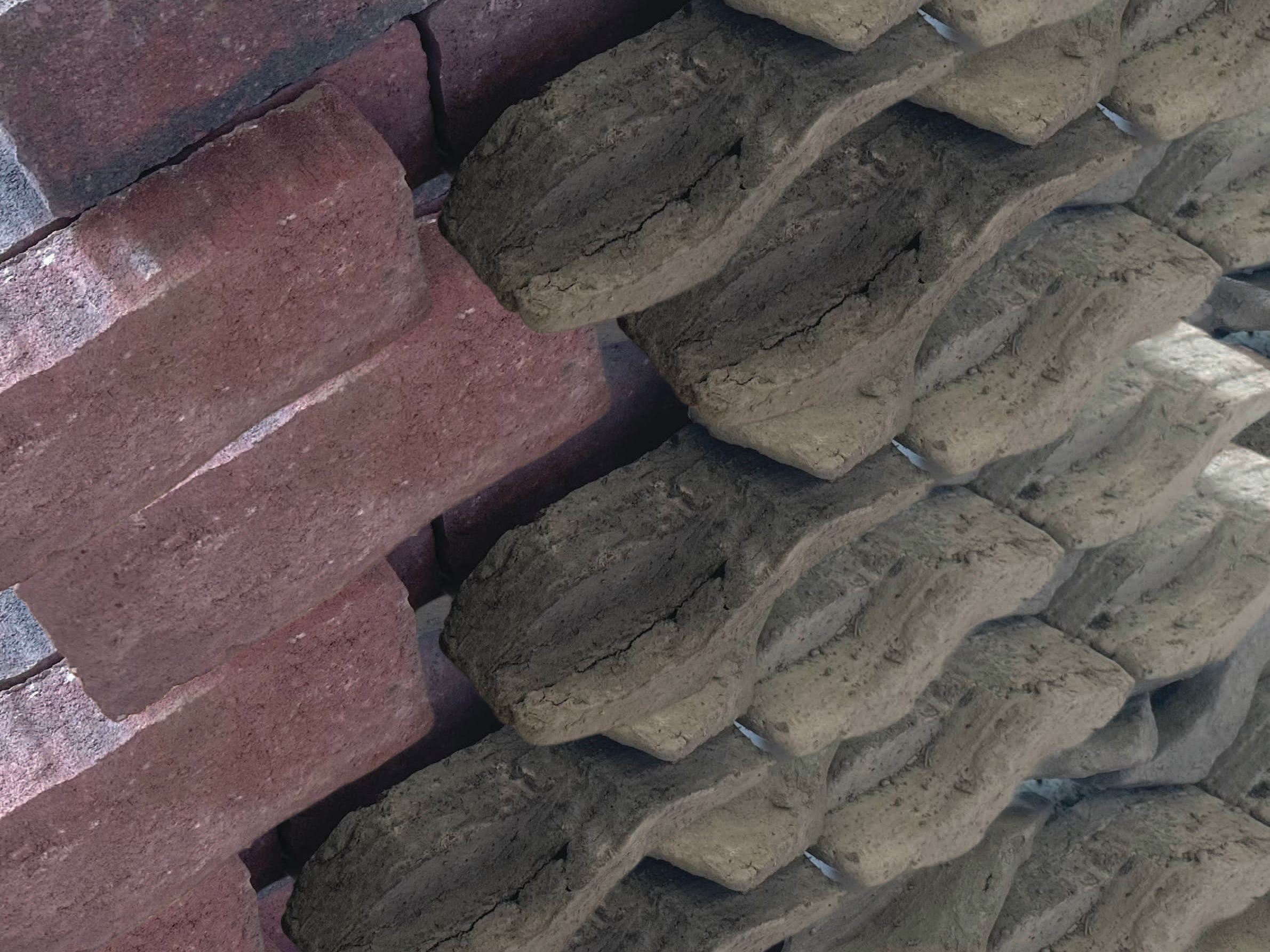
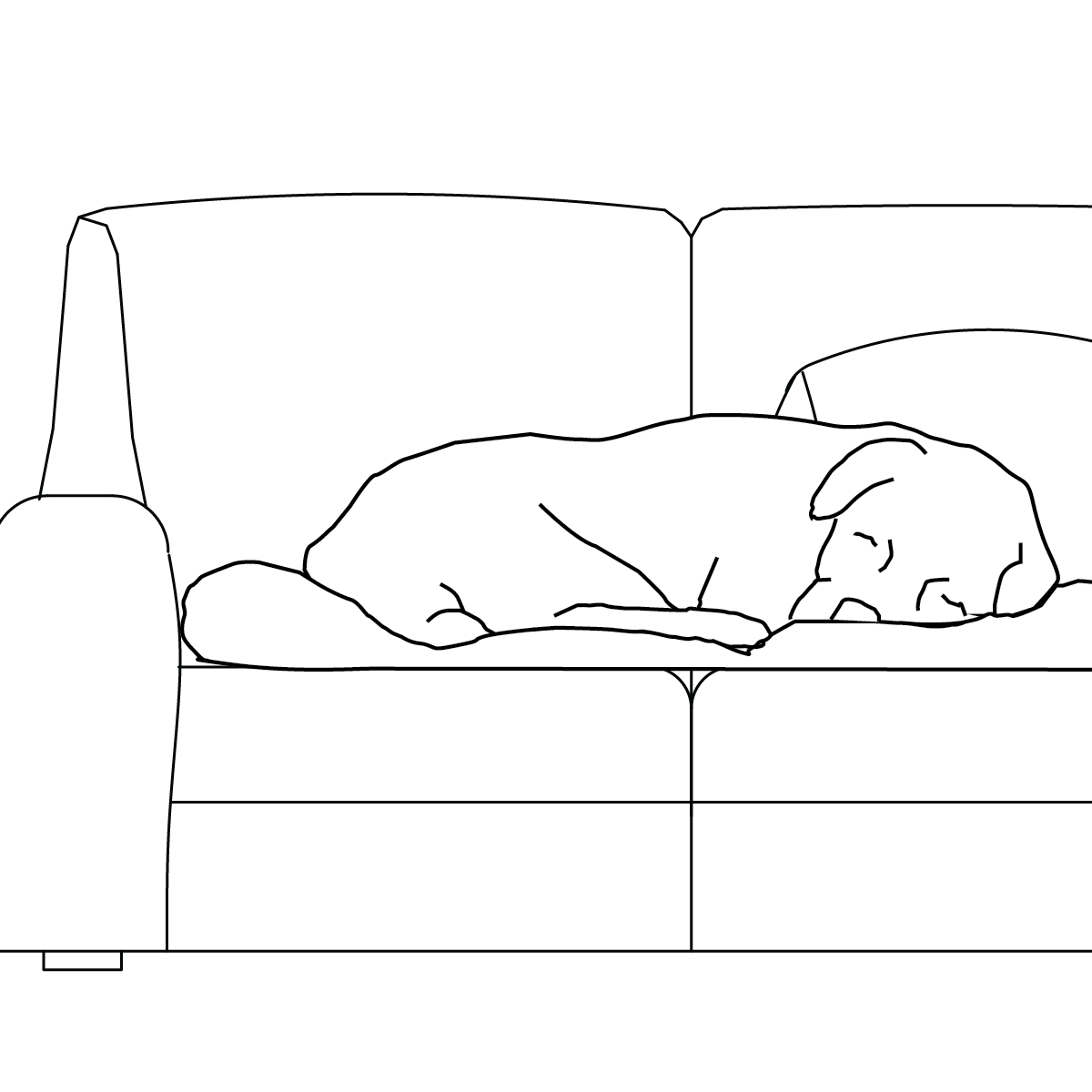
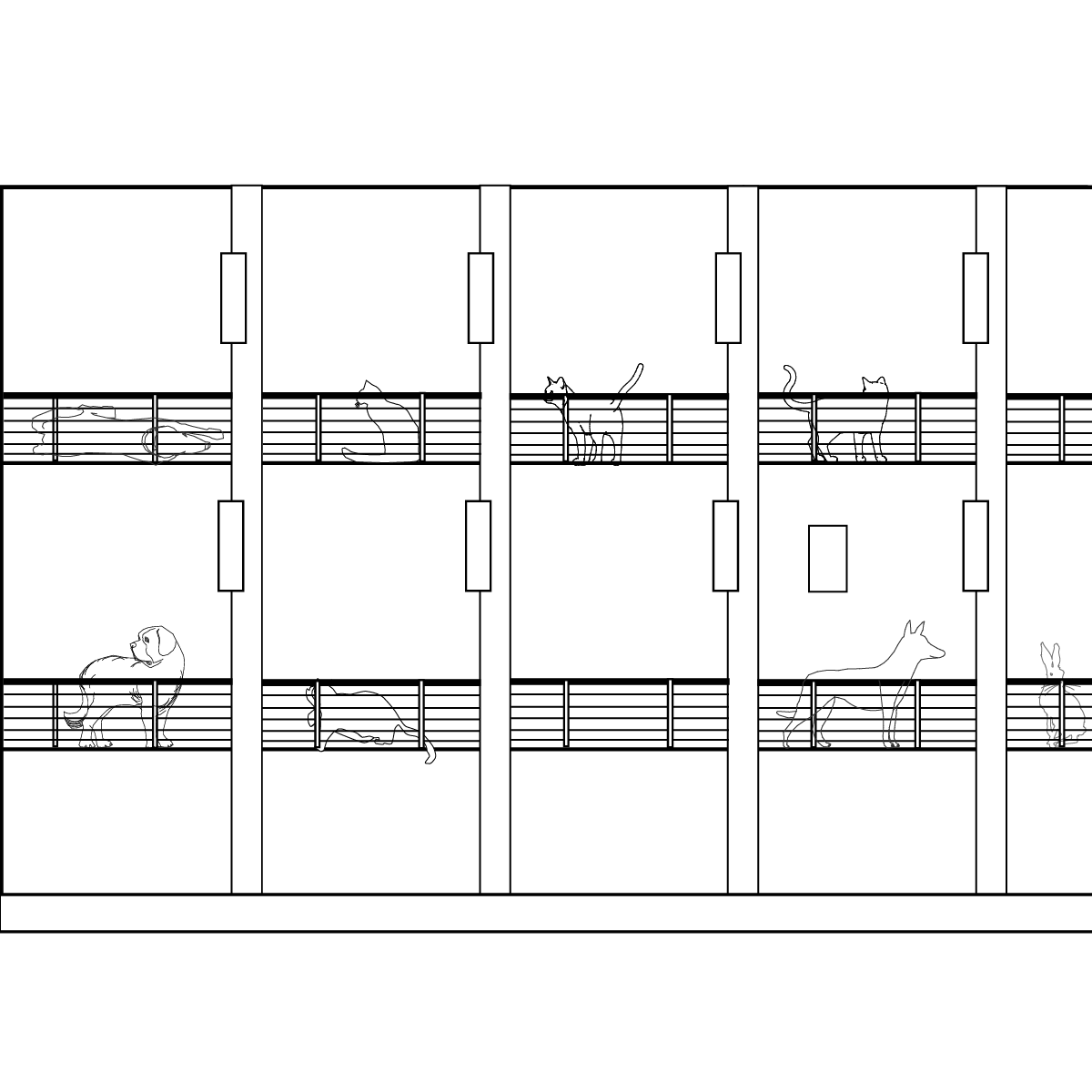
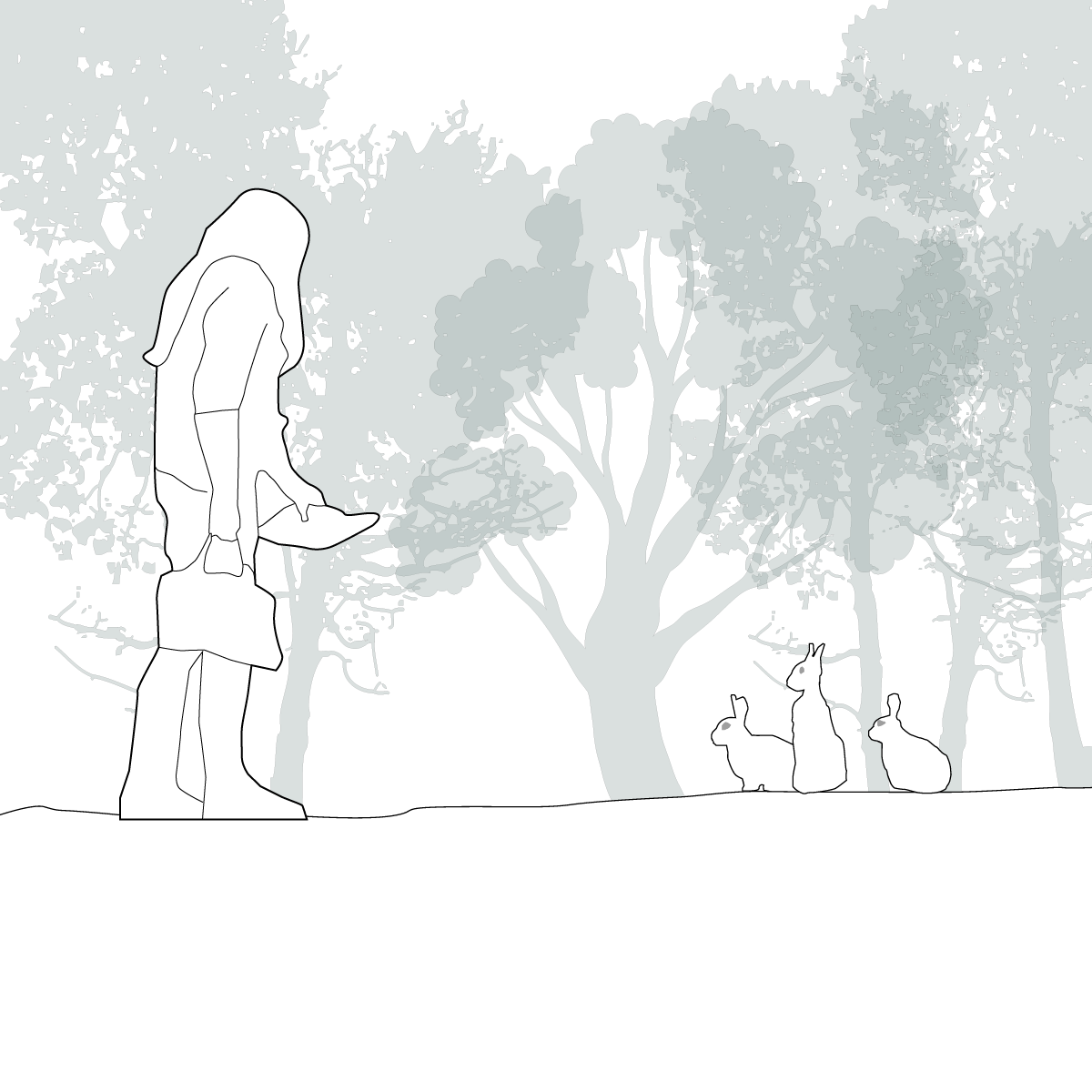
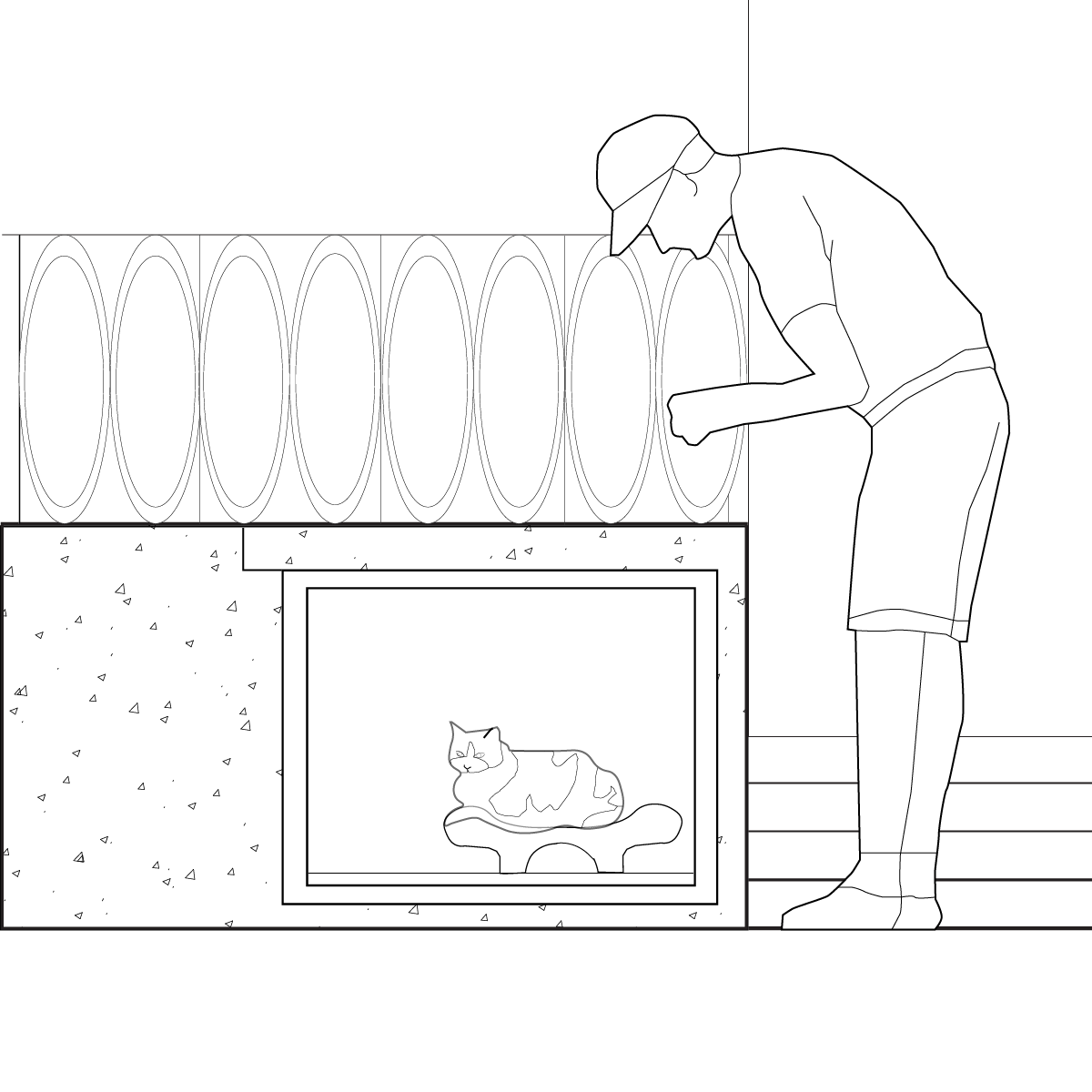
This project began with a solo exploration of the spatial conditions relating to the animals of Pittsburgh, as seen on the left.
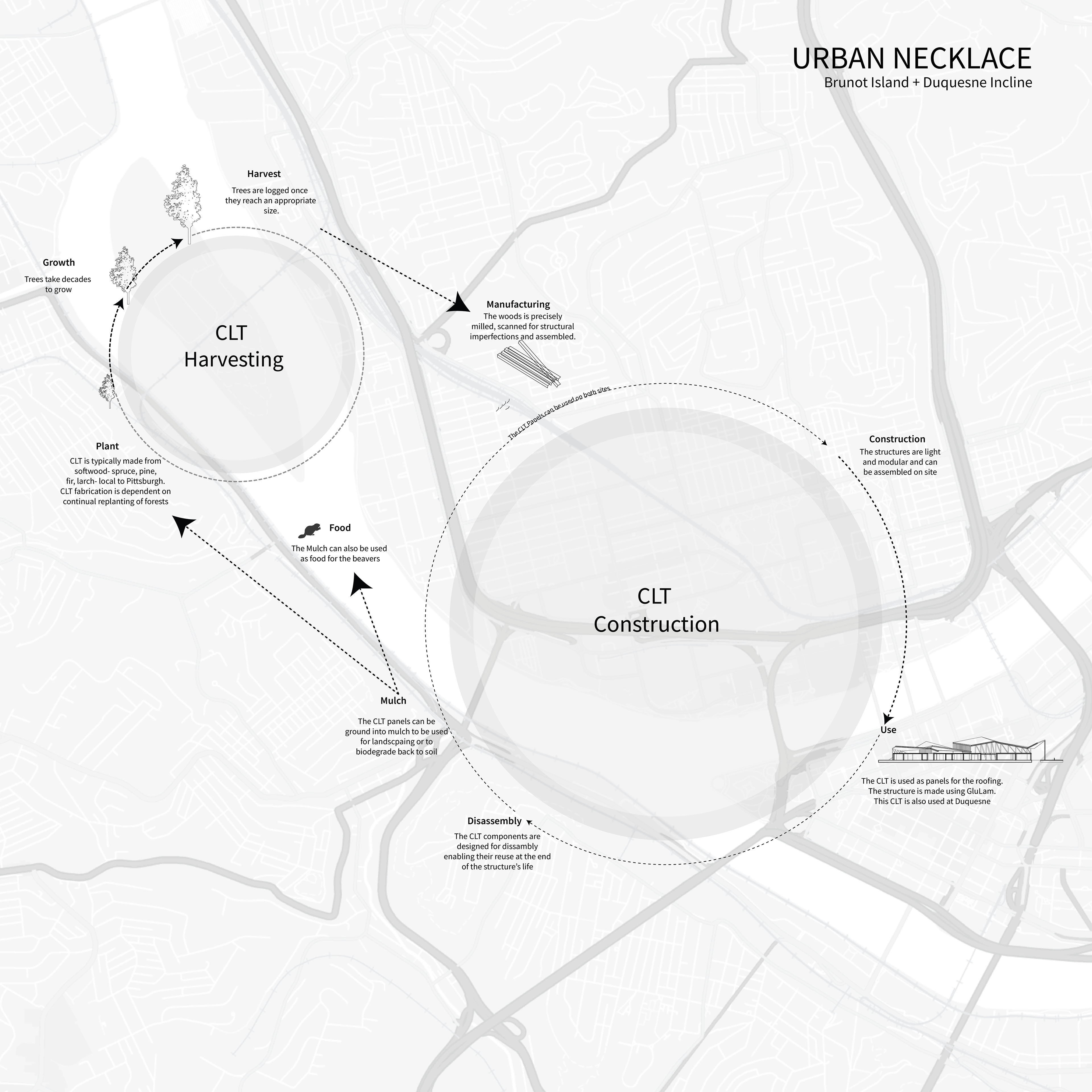
CLOSED LOOP SYSTEM
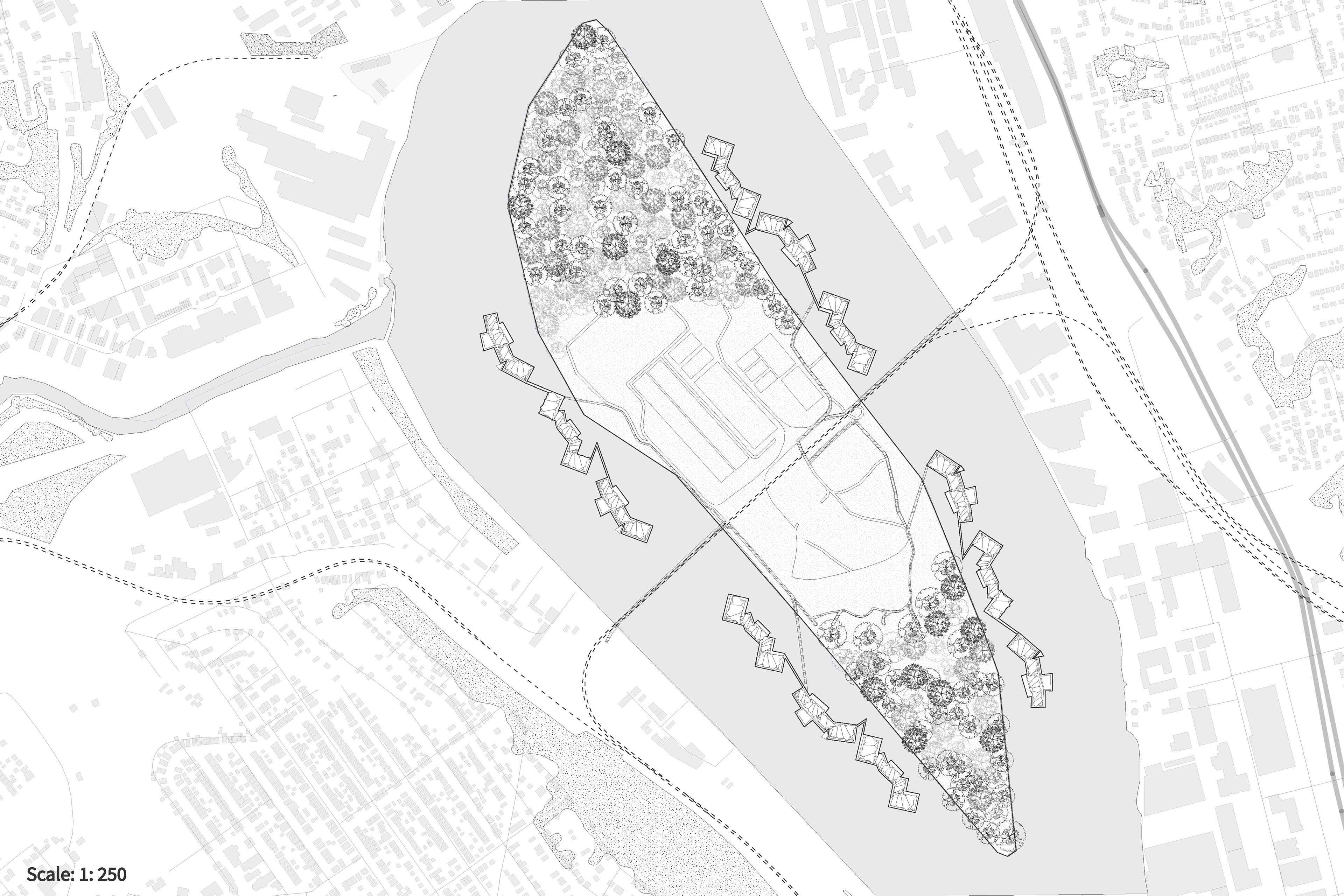
MESH connects Brunot Island and the Duquesne Incline through an “Urban Necklace” of circulation, wildlife viewing, and hybrid housing. The project operates as a closed-loop system: trees grown and harvested on Brunot become CLT, which is manufactured into modular structures designed for assembly, disassembly, and reuse. Material waste is reabsorbed through regrowth and mulch cycles, aligning construction with ecological time instead of treating nature as a backdrop. MESH proposes a new model of living where animal habitat, public access, and urban development evolve together.
BRUNOT ISLAND
drawings by Mahika Singh
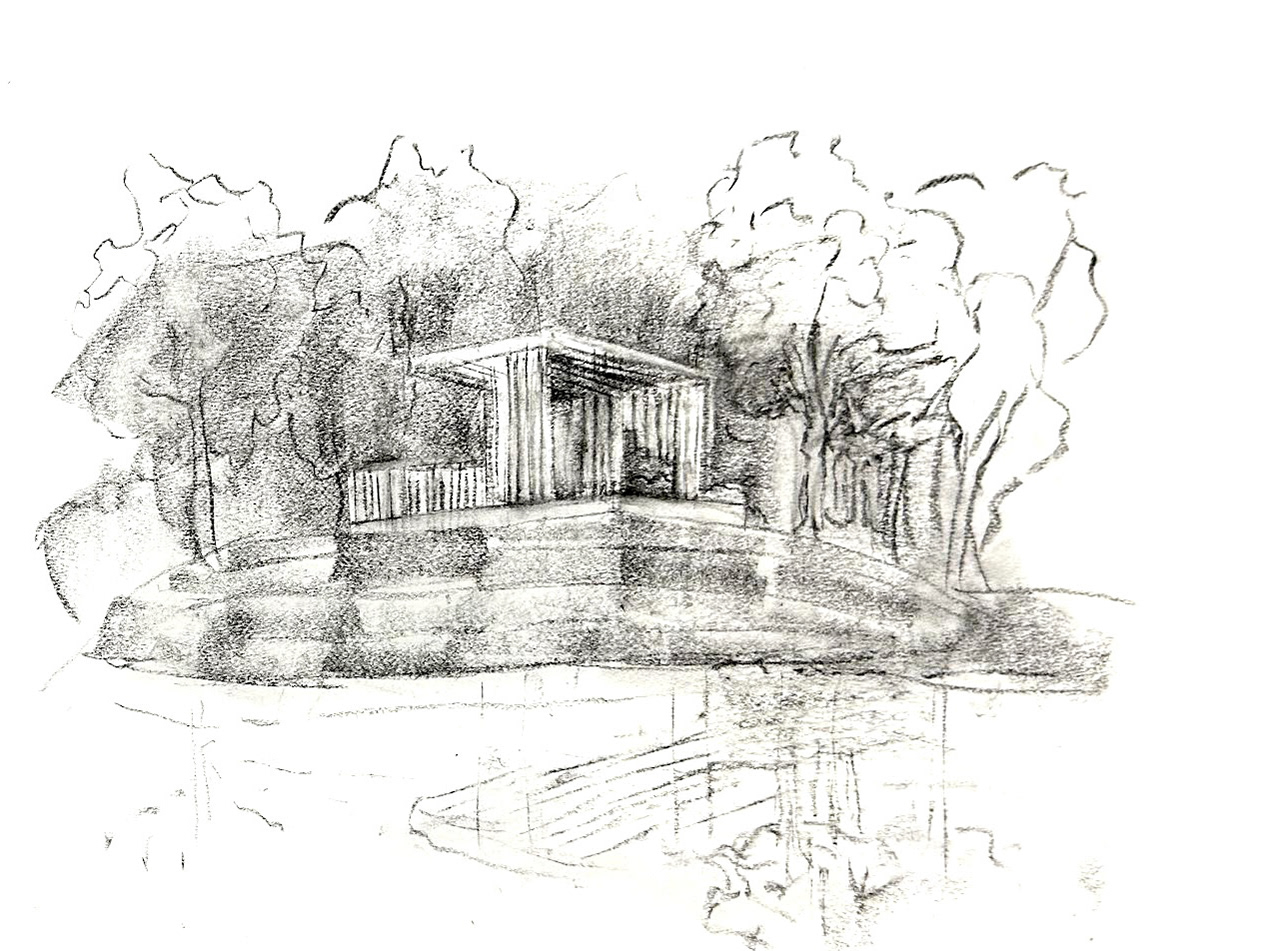
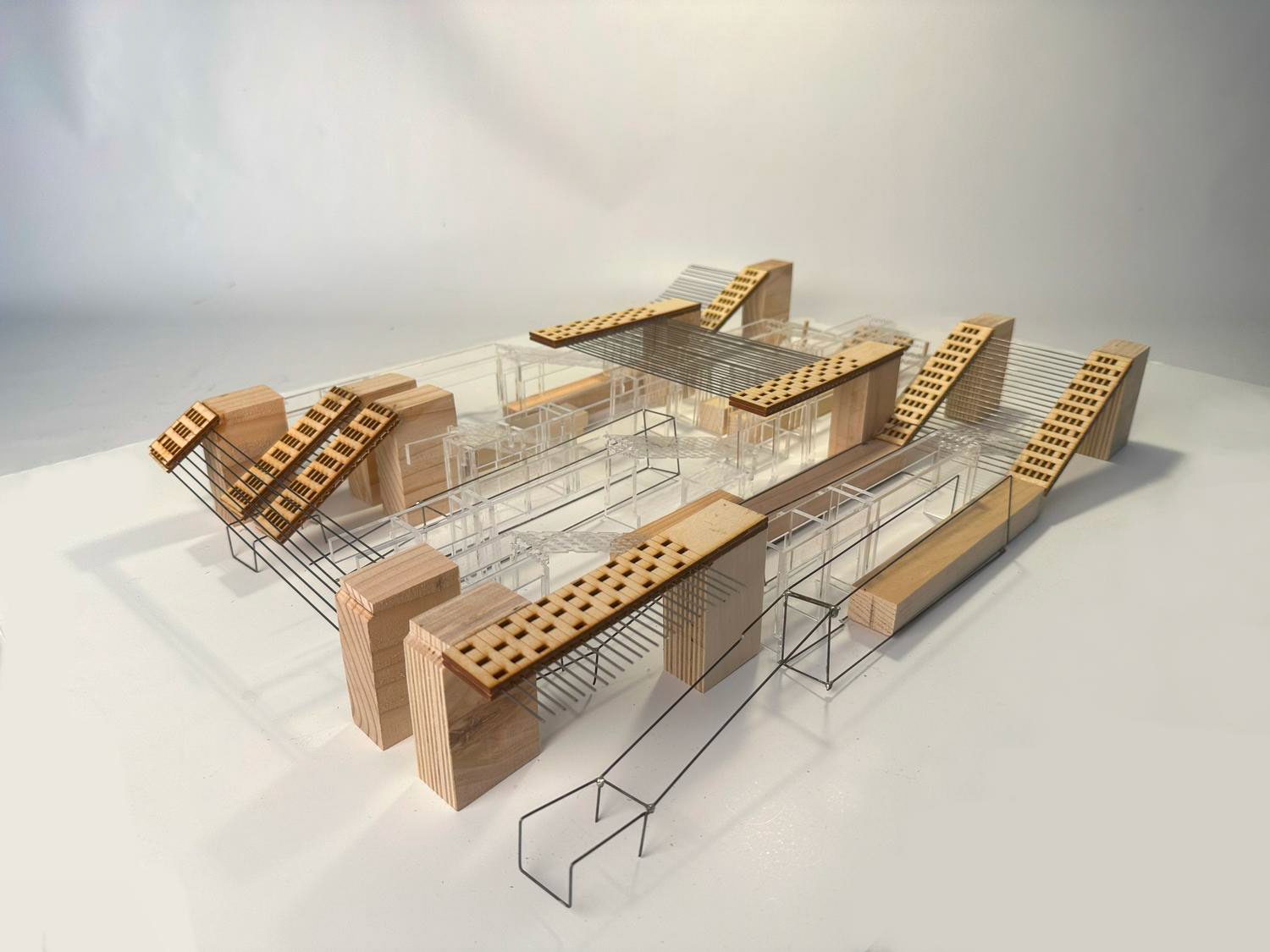
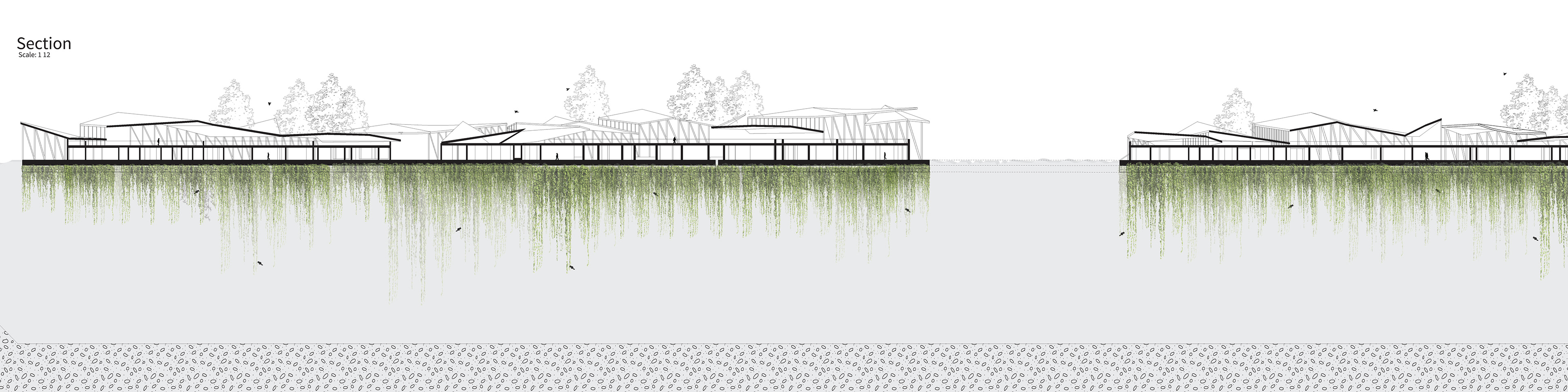
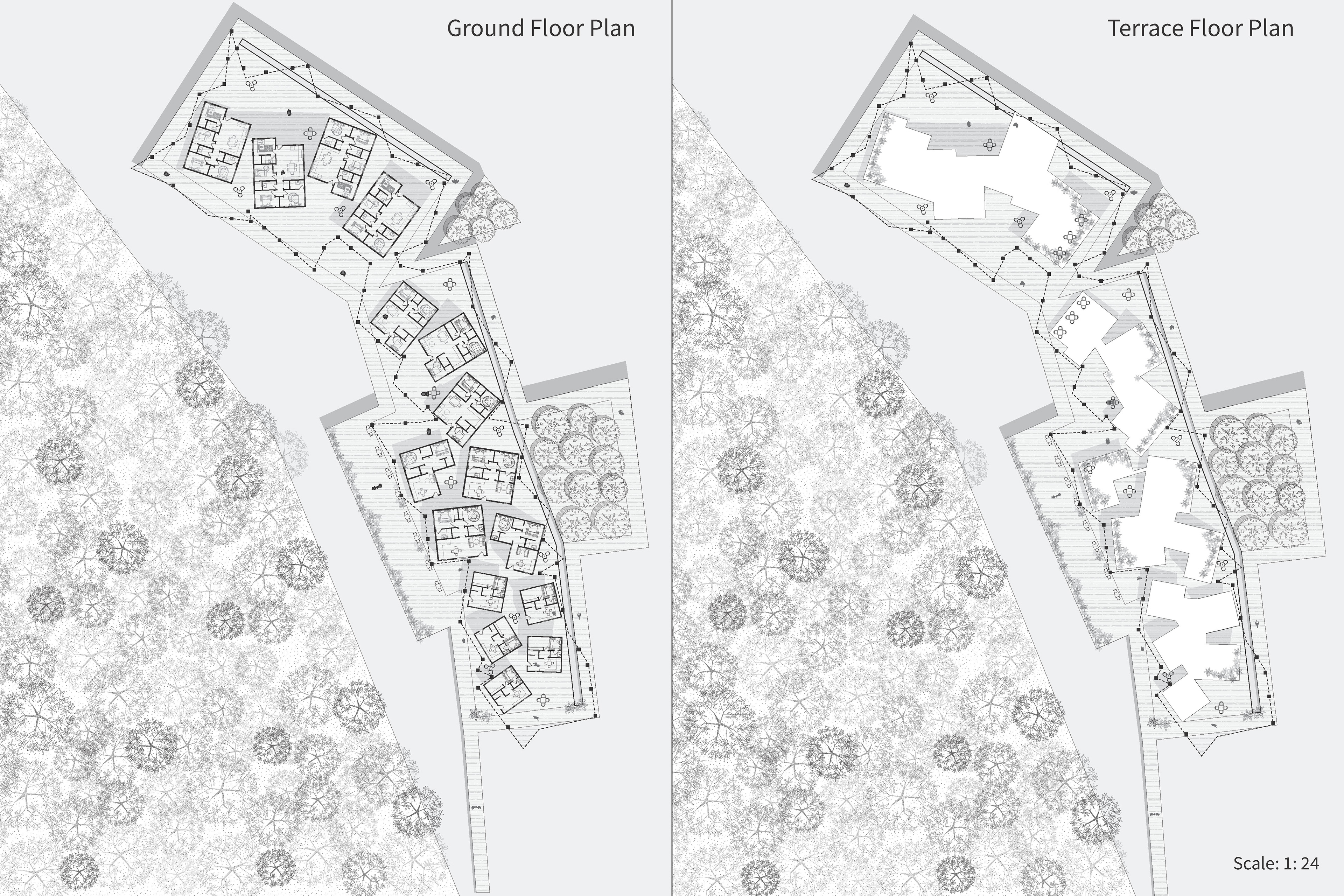
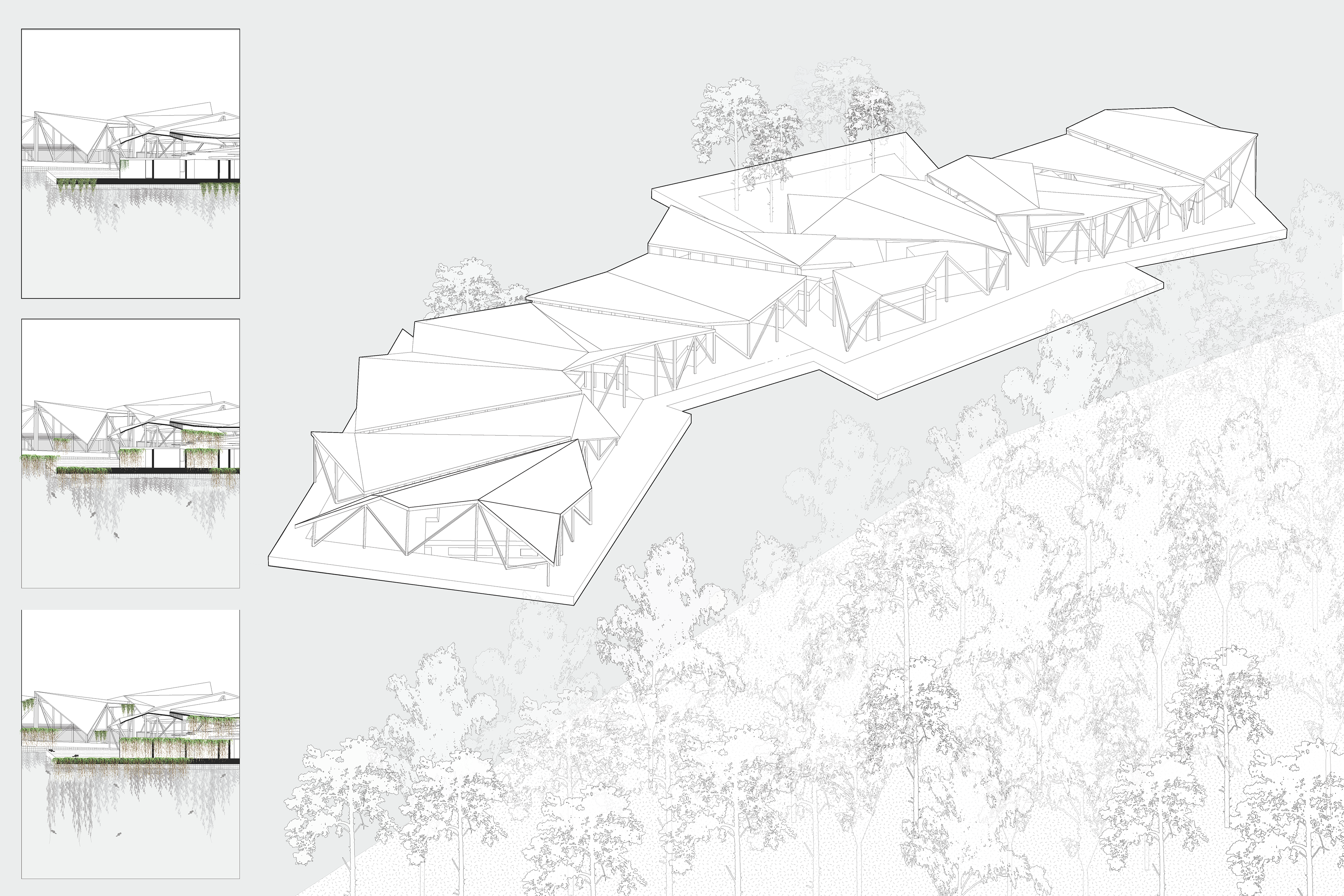
CONCEPT / On Brunot Island, we propose floating housing as a catalyst for the reintroduction of beavers and otters into Pittsburgh’s aquatic ecosystems. Since these animals thrive in cleaner water, we decided that Brunot would be an ideal location to support their habitat as it is currently not habited by humans and only accessible by boat. The mesh gabion construction that allows the housing to float is designed to be an agricultural space for kelp and scallops for beavers and oysters for otters.
HOUSING / The housing is made of modular units with a stepped umbrella roof to maximize sunlight exposure, which creates a shared terrace space. The groups of modular units are rotated to create smaller streams that provide beavers and otters safe passages while being in proximity to those living in the housing.
DUQUESNE INCLINE
drawings by Allyson Yuen
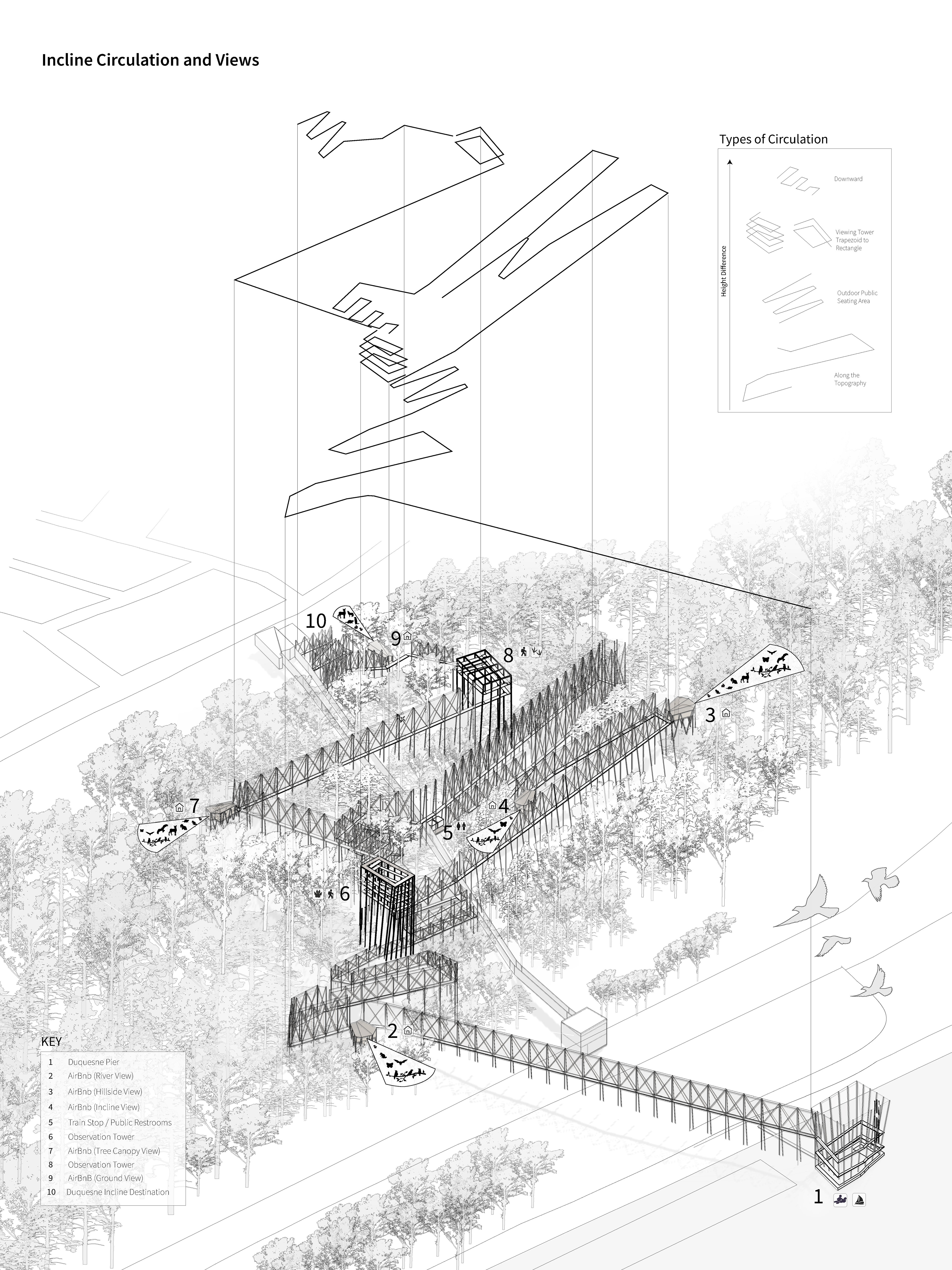
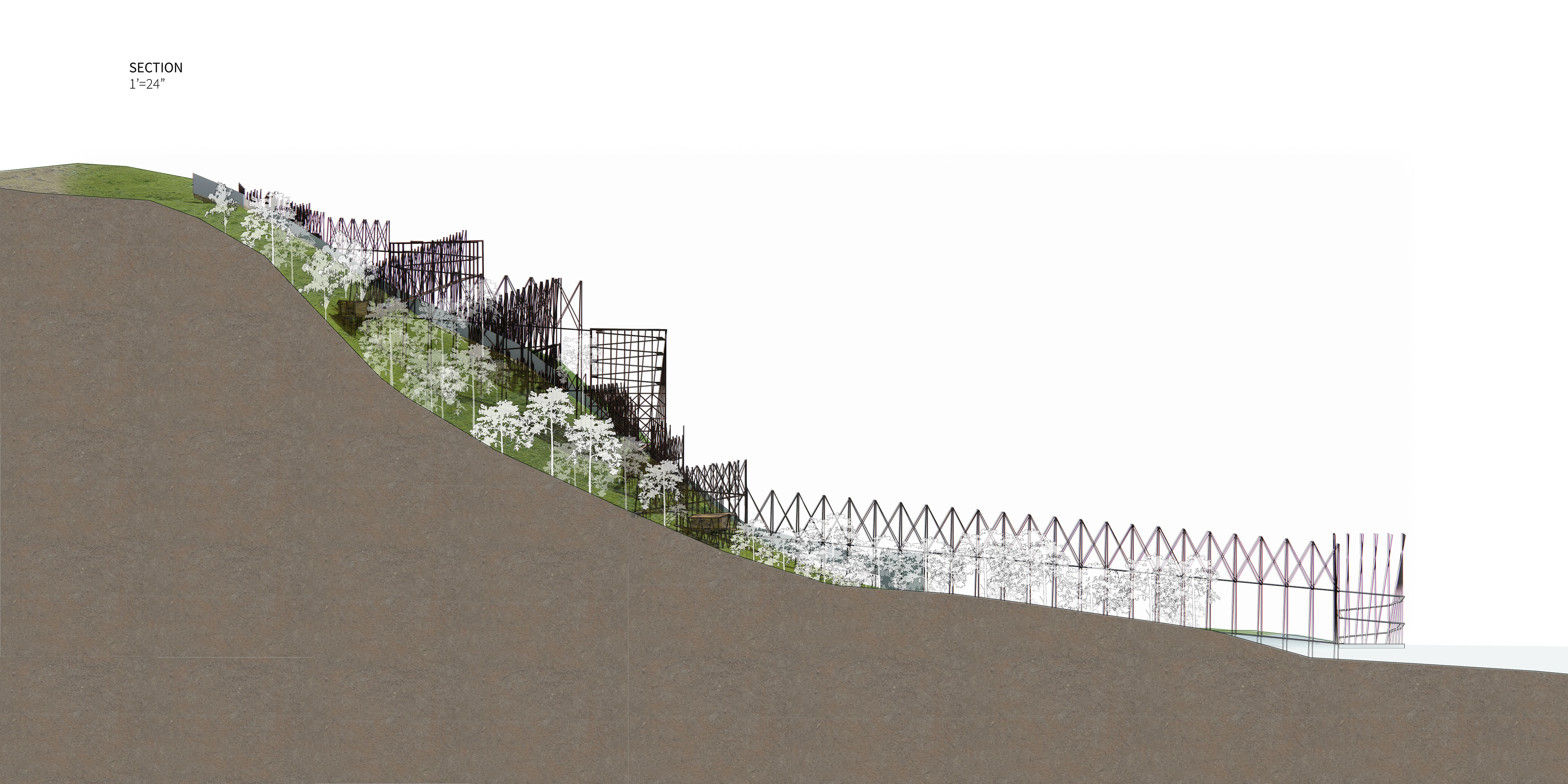
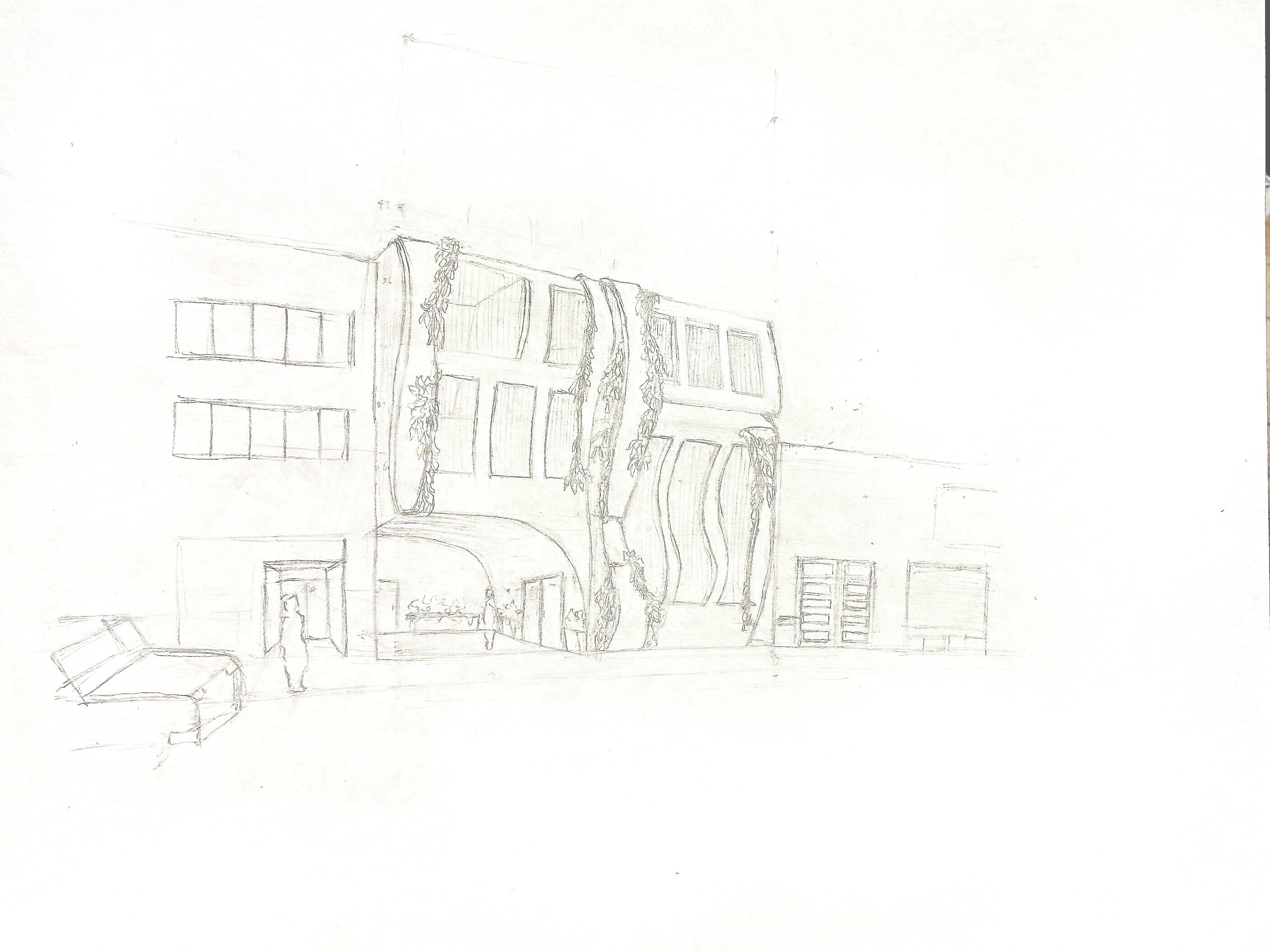
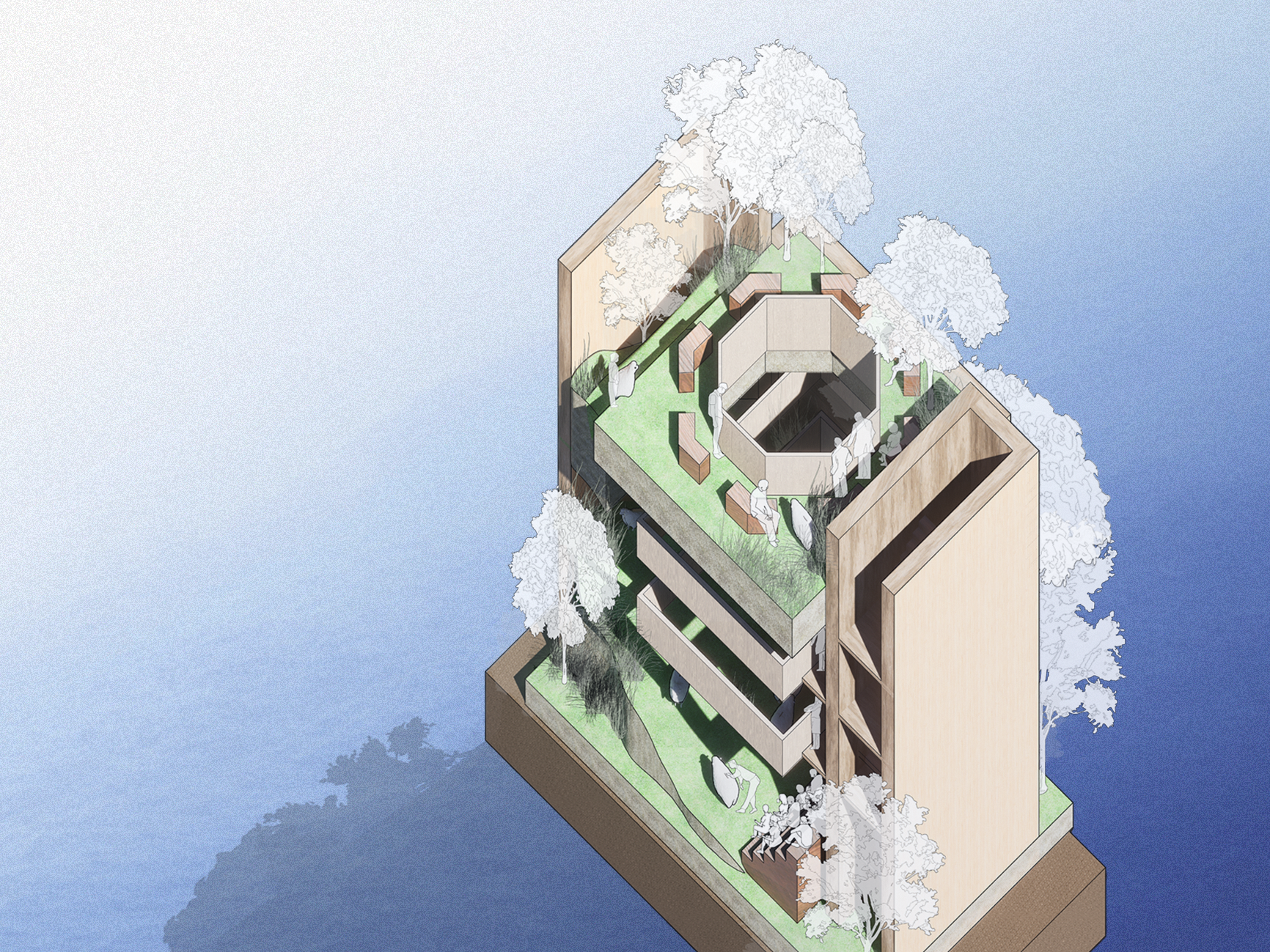
CONCEPT / On Duquesne Incline, we designed a nature walkway consisting of entirely ramps to adapt to the steep terrain of the site, including switchback and zig-zags for extreme slopes, with the intention of increasing visitors’ chances of seeing Pittsburgh’s local animals on its steep terrain.
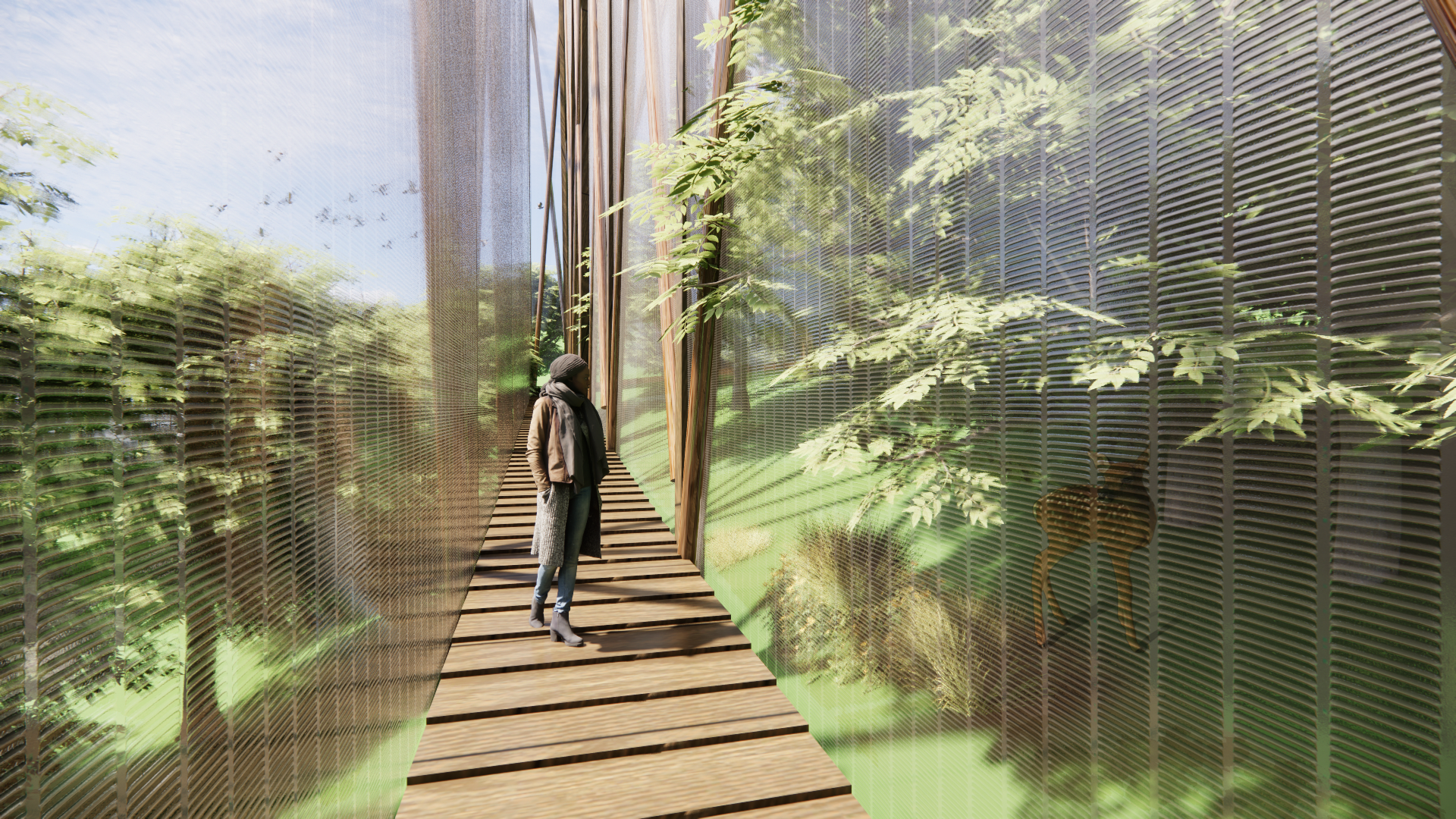
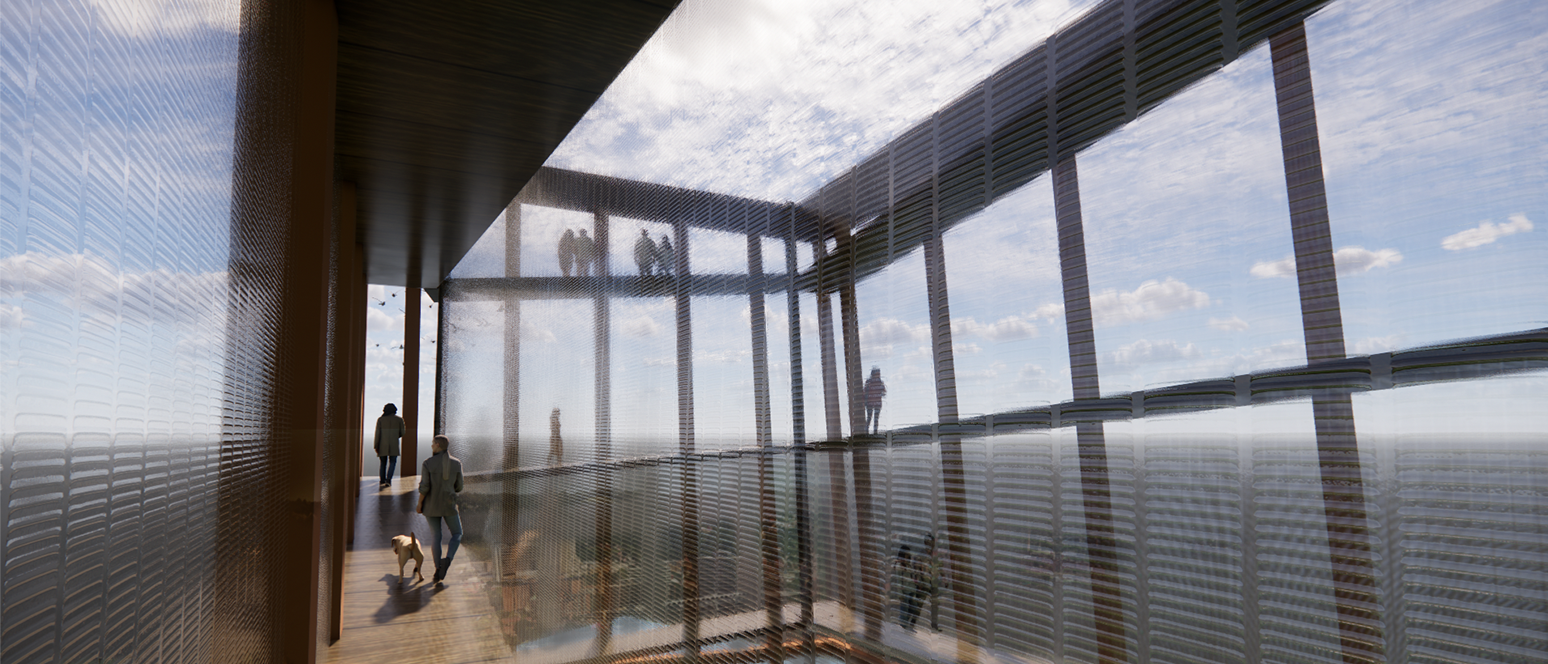
It also uses mesh as an alternative to traditional railings, where people are more caged in while they walk and animal watch, switching our positions to the enclosed. This walkway also offers airBnB rentals scattered throughout the route, while integrating with the historic landmark cable car ride. The viewing towers and rentals allow for more time to animal watch along the path from the parking lot to the top.
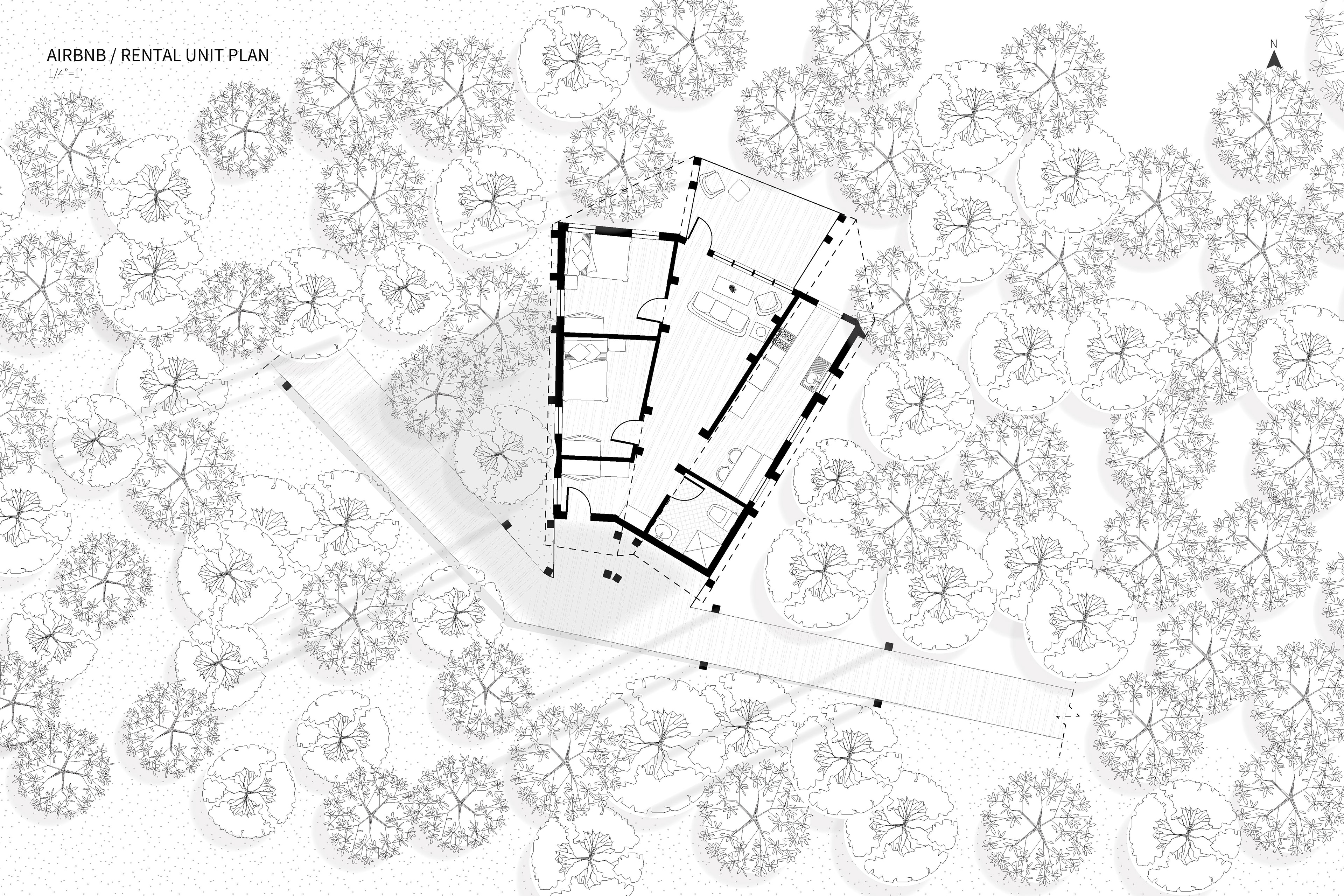
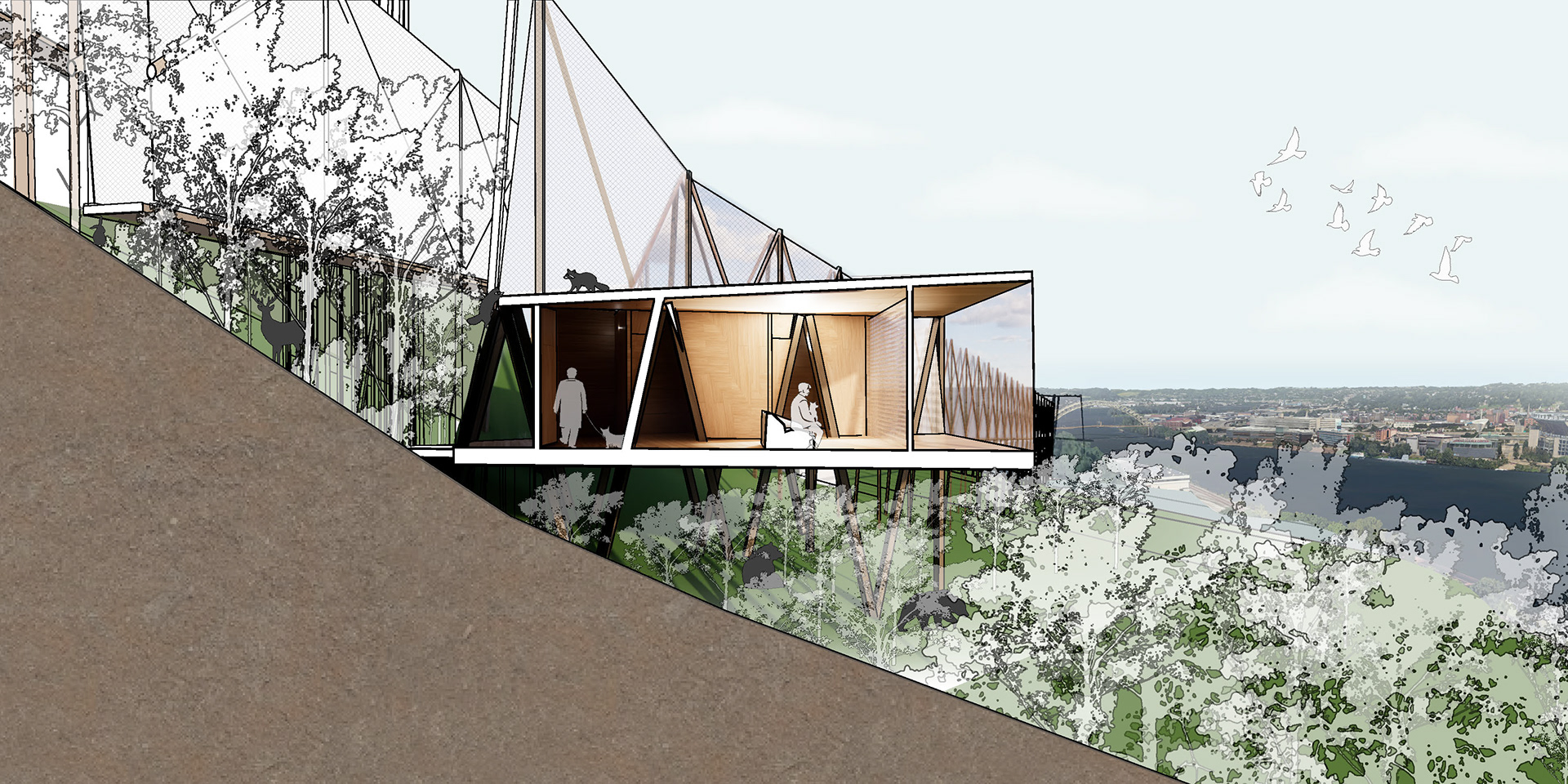
HOUSING / The airBnB short term rentals frame different views on the hill: the river, the hillside/tree canopy, the incline, and the ground view. So this also shows what animals one can see at each rental unit with a certain view.
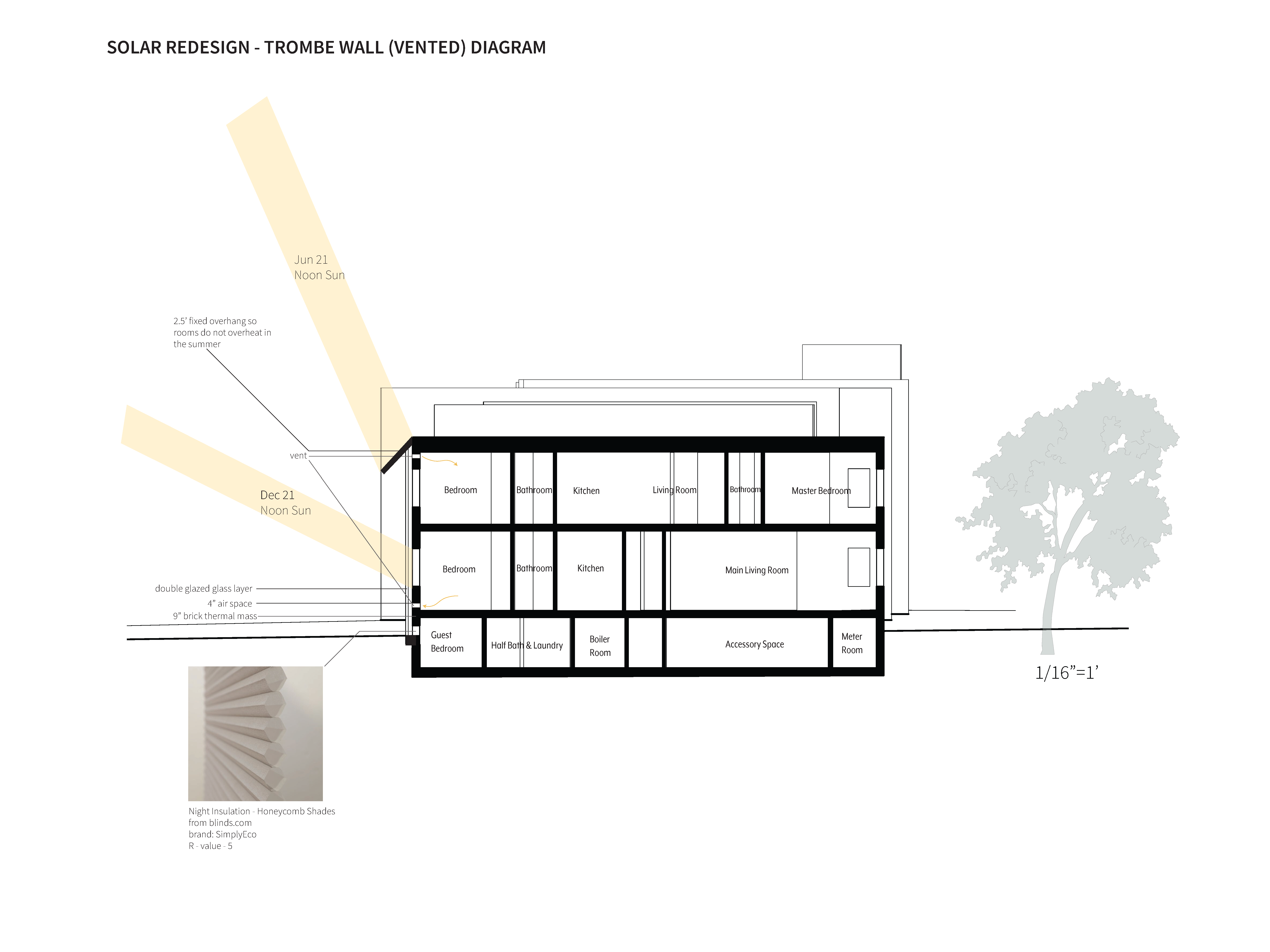
This floorplan would be one example, specifically the river view unit of how one enters from the path onto a porch, and there is a separation of living areas and focusin on just the view using the structural glulam columns sourced from Brunot Island.